


AC Cycling switch.


Thread Starter
Administrator


Joined: Nov 2004
Posts: 4,084
Likes: 235
From: Southern California
You can get the Bosch relay at almost any truck parts store or stereo shop that installs alarms, the 30 amp shouldn’t be much over $5.00 to $6.00 and at the heavy truck parts you can also get the heavy-duty relay socket with 10ga. power feed wire.
Also if you go an auto salvage yard (Junk Yard) you can pick them up by the handfuls from most of the European cars, Volvo, Mercedes newer VW's.
Most all of the newer Asian imports also have a version of the ISO relay (cube relay) (fuel pump, headlight, blower relays) just check the pin out diagram on the side to verify the connections.
You can also get a cheap generic version at Radio Shack, Target and all auto parts like Auto Zone for fog lights but I would honestly buy the genuine thing because they are built better.
Check in my gallery, I have 2 for comparison to see what is inside.
https://www.dieseltruckresource.com/...hp?photo=12699
That is a clean looking truck, real nice.
This is the part number for the cycling switch.
Temp Sensing Switch P.N.#56005783 (mounted on H block) $64.88 (takes 1 day to get.)
Jim
Also if you go an auto salvage yard (Junk Yard) you can pick them up by the handfuls from most of the European cars, Volvo, Mercedes newer VW's.
Most all of the newer Asian imports also have a version of the ISO relay (cube relay) (fuel pump, headlight, blower relays) just check the pin out diagram on the side to verify the connections.
You can also get a cheap generic version at Radio Shack, Target and all auto parts like Auto Zone for fog lights but I would honestly buy the genuine thing because they are built better.
Check in my gallery, I have 2 for comparison to see what is inside.
https://www.dieseltruckresource.com/...hp?photo=12699
That is a clean looking truck, real nice.
This is the part number for the cycling switch.
Temp Sensing Switch P.N.#56005783 (mounted on H block) $64.88 (takes 1 day to get.)
Jim

Adminstrator-ess
Joined: Mar 2003
Posts: 22,594
Likes: 19
From: New Holland, PA
 Easier on late models
Guys with '92 and '93 trucks, there is an even easier way to bypass the cycling switch. All you have to do is cut the two outer wires off the plug and tie them together. The clutch is already run off a relay through the PCM on the '92 and '93 trucks.


Registered User
Joined: Jun 2005
Posts: 1,737
Likes: 0
From: Springfield, TN
dave i came in today after dealing with this on a truck i am working on ALL DAY... read the whole thread and was about to post that with the IC trucks it would be silly to bypass the original relay... but it seems that, once again, you beat me to it! what i spent all day on i will not go out and fix in 3 minutes
Thread Starter
Administrator
Joined: Nov 2004
Posts: 4,084
Likes: 235
From: Southern California
Hey guys,
The reason that I made this modification was to externally switch the clutch coil.
Deep inside the potting of the cycling switch is a small dip relay that had been getting problematic, the AC would be running fine and then for no apparent reason the clutch would disengage, If I would rap on the dashboard the cycling switch it would cut back in and work for a few miles again so this was my quest to eliminate it with something external that could be repaired in the field.
The current of the clutch coil is controlled by the relay burried deep insied the cycling sitch housing.
The reason that I made this modification was to externally switch the clutch coil.
Deep inside the potting of the cycling switch is a small dip relay that had been getting problematic, the AC would be running fine and then for no apparent reason the clutch would disengage, If I would rap on the dashboard the cycling switch it would cut back in and work for a few miles again so this was my quest to eliminate it with something external that could be repaired in the field.
The current of the clutch coil is controlled by the relay burried deep insied the cycling sitch housing.
Registered User
Joined: Jun 2005
Posts: 1,737
Likes: 0
From: Springfield, TN
on the 92 and 93 it has the same "H" block but over on the driver's fender there is a large relay that controls the a/c. so if the cycling switch becomes a problem on a 92/93 truck all you have to do to bypass it is cut two wires and splice them together! the pressure switch in the expansion block will even be functional still.

Registered User
Joined: May 2005
Posts: 335
Likes: 1
My '89 has been retrofitted to R134A. Can I do this with my truck as well? The temp from the vents on max AC usually hovers around 50-degrees. Sometimes it will pull down to between 45 & 48. If it would remain below 45 I would be satisfied but sometimes it will creep up to over 50 . Any suggestions? Thanks in advance!
. Any suggestions? Thanks in advance!
Registered User
Joined: Jun 2005
Posts: 1,737
Likes: 0
From: Springfield, TN
Dave, for me at least it did not prove as easy as splicing the 2 wires together, something got messed up with that setup running throught the computer. i will try to put together a drawing, but, the large blue wire is the keyed power for the relay. the brown wire goes to the battery through a fuse link. the blue with black stripe goes to the compressor. the tricky one (for me) was the blue with orange stripe. it travels from the pressure switch on the expansion block, into the cab. however, the blue with orange stripe coming off the relay travels to the computer... i did not see one that ran directly from the cab to the computer. so what i did was took the other wire coming off the pressure switch (blue with white stripe) and connected it to a wire that i ran directly to the blue with orange stripe connected to the relay. when the MAX A/C, A/C, and Defrost are pressed the relay is activated, on vent and heat, it is not. works great... so let me give the short version
92 & 93 Cylce Switch/ Computer Bypass....
1. Pull the 2 prong connector off of the Expansion block on the passenger side of the engine bay.
2. Cut wire that is blue with white stripe.
3. Attach jumper wire that is long enough to run across the back of the engine bay to the drivers inner fender.
4. Pull the connector out of the A/C relay (should be the closest to the firewall)
5. Cut the blue with orange stripe and slice in your jumper wire to the connector.
6. plug both the connetors back in and you are good to go! pressure switch will still be functional. when you press the ac, max ac, or defrost it uses a ground to kick the compressor on. if the pressure is too low or too high it will will diconnect and the ground will not be made. (from what i understand)
a piece of wire and 2 butt connectors will get you back in business in a bind... something that would be available at any wal-mart or target.
92 & 93 Cylce Switch/ Computer Bypass....
1. Pull the 2 prong connector off of the Expansion block on the passenger side of the engine bay.
2. Cut wire that is blue with white stripe.
3. Attach jumper wire that is long enough to run across the back of the engine bay to the drivers inner fender.
4. Pull the connector out of the A/C relay (should be the closest to the firewall)
5. Cut the blue with orange stripe and slice in your jumper wire to the connector.
6. plug both the connetors back in and you are good to go! pressure switch will still be functional. when you press the ac, max ac, or defrost it uses a ground to kick the compressor on. if the pressure is too low or too high it will will diconnect and the ground will not be made. (from what i understand)
a piece of wire and 2 butt connectors will get you back in business in a bind... something that would be available at any wal-mart or target.

Registered User
Joined: Jan 2005
Posts: 75
Likes: 4
From: Rockwell NC
This question may not be directly relevant to this thread, but I think it might be darn close to it. My neighbor (full-service garage) is currently working on the AC in my 92 Dodge. He has converted it to 134. He stopped at my place this evening on his way home and told me he's ran into a problem that is literally kicking his butt. As best as I can explain... start the truck, turn the AC on and everything is great. The AC runs, cycles on and off like normal, blows cold air as it should, etc. Then after 3-5 minutes something goes haywire, the pressure starts climbing and if you don't shut the AC off in time it will blow the pop-off valve. He just replaced the little switch that has two prongs on it assuming it was a pressure switch, and it didn't help a bit. I told him I had been reading what you folks were discussing and it sounded like it might be related to the problem we are having. Any help will be GREATLY appreciated.
Thread Starter
Administrator
Joined: Nov 2004
Posts: 4,084
Likes: 235
From: Southern California
This question may not be directly relevant to this thread, but I think it might be darn close to it. My neighbor (full-service garage) is currently working on the AC in my 92 Dodge. He has converted it to 134. He stopped at my place this evening on his way home and told me he's ran into a problem that is literally kicking his butt. As best as I can explain... start the truck, turn the AC on and everything is great. The AC runs, cycles on and off like normal, blows cold air as it should, etc. Then after 3-5 minutes something goes haywire, the pressure starts climbing and if you don't shut the AC off in time it will blow the pop-off valve. He just replaced the little switch that has two prongs on it assuming it was a pressure switch, and it didn't help a bit. I told him I had been reading what you folks were discussing and it sounded like it might be related to the problem we are having. Any help will be GREATLY appreciated.
The first thing is make sure you are getting adequate air flow through the condenser and the clutch fan is working properly, if you do not have enough air to remove the heat the system pressures will exceed the capabilities and cause the relief to pop or to burst a hose.
I had a suburban where the compressor got so hot the paint burned off and it turned gray.
Soon after this the compressor locked up and burned off my belts.
It was all because my fan clutch was bad
This also sounds like there might be some restriction somewhere in the high side, if it seems to be working fine and then the pressures start going through the roof I would first make sure it was vacuumed long enough to evaporate any moisture in the system then I would look at the H-valve for maybe some foreign matter lodging itself in the metering orifice and causing the liquid to have nowhere to go.
Has the receiver/dryer been replaced when the conversion was performed?
Has the system been converted to the new oil by having all of the old oil removed including physically dumping the compressor?
Are there gauges on the system when it starts going high, and how high does it get?
What pop off are you referring to? The one on the compressor.
Here are some pressure/ temperature charts for reference.
http://www.icorinternational.com/htm...%20Refridg.pdf
So you need to check:
1) Enough airflow Fan Clutch.
2) Any restrictions in the high side might need to remove H-valve and physically check this.
3) Moisture removal, system vacuumed long enough.
4) System oil has been changed.
5) Receiver/Dryer replaced.
6) Inside blower is working.
I believe the pressure switch on the H-valve is only for low-pressure cutout (this is why you can jumper this switch when you are installing your initial charge) although some systems might also have a High cut out as well as a superheat switch as with the GM’s.
Jim
Registered User
Joined: Jan 2005
Posts: 75
Likes: 4
From: Rockwell NC
Jim,
Thank you for your reply.
To answer some of your questions... the fan clutch is almost new and it DOES work as you can hear it lock up.
My buddie has the AC equipment and services the AC systems on cars on a regular basis. He does know what he is doing, but he says this one has got him stumped.
The H-valve and the receiver/dryer are both new (just replaced). He has vacuumed this thing seemingly for hours.
As for physically dumping the compressor, you will have to explain that one a bit more for me. Do you mean to take off and dump it out?
The gauges are on the system while it's running and I think he said it got near 400 psi when it popped-off. As to where the pop-off is located, I don't know. I only know there was a mist (or fog) coming out of the engine compartment when he yelled at me to shut it down. I also think it squealed the belt (not positive, but pretty sure).
Thank you for the help. I will print the info and pass it on in the morning.
Thank you for your reply.
To answer some of your questions... the fan clutch is almost new and it DOES work as you can hear it lock up.
My buddie has the AC equipment and services the AC systems on cars on a regular basis. He does know what he is doing, but he says this one has got him stumped.
The H-valve and the receiver/dryer are both new (just replaced). He has vacuumed this thing seemingly for hours.
As for physically dumping the compressor, you will have to explain that one a bit more for me. Do you mean to take off and dump it out?
The gauges are on the system while it's running and I think he said it got near 400 psi when it popped-off. As to where the pop-off is located, I don't know. I only know there was a mist (or fog) coming out of the engine compartment when he yelled at me to shut it down. I also think it squealed the belt (not positive, but pretty sure).
Thank you for the help. I will print the info and pass it on in the morning.
Thread Starter
Administrator
Joined: Nov 2004
Posts: 4,084
Likes: 235
From: Southern California
Jim,
Thank you for your reply.
To answer some of your questions... the fan clutch is almost new and it DOES work as you can hear it lock up.
My buddie has the AC equipment and services the AC systems on cars on a regular basis. He does know what he is doing, but he says this one has got him stumped.
The H-valve and the receiver/dryer are both new (just replaced). He has vacuumed this thing seemingly for hours.
As for physically dumping the compressor, you will have to explain that one a bit more for me. Do you mean to take off and dump it out?
The gauges are on the system while it's running and I think he said it got near 400 psi when it popped-off. As to where the pop-off is located, I don't know. I only know there was a mist (or fog) coming out of the engine compartment when he yelled at me to shut it down. I also think it squealed the belt (not positive, but pretty sure).
Thank you for the help. I will print the info and pass it on in the morning.
Thank you for your reply.
To answer some of your questions... the fan clutch is almost new and it DOES work as you can hear it lock up.
My buddie has the AC equipment and services the AC systems on cars on a regular basis. He does know what he is doing, but he says this one has got him stumped.
The H-valve and the receiver/dryer are both new (just replaced). He has vacuumed this thing seemingly for hours.
As for physically dumping the compressor, you will have to explain that one a bit more for me. Do you mean to take off and dump it out?
The gauges are on the system while it's running and I think he said it got near 400 psi when it popped-off. As to where the pop-off is located, I don't know. I only know there was a mist (or fog) coming out of the engine compartment when he yelled at me to shut it down. I also think it squealed the belt (not positive, but pretty sure).
Thank you for the help. I will print the info and pass it on in the morning.
My buddie has the AC equipment and services the AC systems on cars on a regular basis. He does know what he is doing.
First let me say, I am sorry if you took this wrong,
I am in no way saying he does not what he is doing, there are a lot of things I have not seen but also a lot of circumstances I have run into while servicing both commercial, coach and auto refrigeration.
I have had a few AC units that had excessive high pressures, that exceeded 400 PSIG before the drive belt burned off and the problem was in the compressor, something internally in the valve plate. I have had 1 in an A-6 axial and the other was an SD-510 Sankyo compressor.
I read in some of my technical books about how to isolate the compressor and check for performance but I would have to find them.
Information for the Sanyo SD-709 compressor.
Check page 31 for the instructions on changing the oil, also #21 on Page 32, is the condenser possibly blocked with road debris or mud?
http://www.sanden.com/support/pdf/sd7servicemanual.pdf
See page 13 first paragraph on right side.
http://www.chekchart.com/PDFs/cc_hvac_sh_8.pdf
Good reading on AC
http://www.allpar.com/eek/ac.html
Some information on the Nippondenso C-171 compressor.
http://members.lycos.nl/dodgedaytona...20checking.pdf
Jim
Registered User
Joined: Jan 2005
Posts: 75
Likes: 4
From: Rockwell NC
No apology necessary, Jim. If anything, maybe I am guilty of giving too much info by making that statement. I rebuild manual transmissions and transfer cases on a regular basis and can't tell you the number of times I have reassembled a "basket-case" that "me and my buddie thought we could do it, but we had a couple pieces left over".
My buddie is beyond shadetree ability and I guess I just felt the need to add that information for clarity.
Thank you again for your reply, and I will pass the info along this morning. If/when he/we get it figured out I will post some feedback.
My buddie is beyond shadetree ability and I guess I just felt the need to add that information for clarity.
Thank you again for your reply, and I will pass the info along this morning. If/when he/we get it figured out I will post some feedback.

Registered User
Joined: Oct 2005
Posts: 329
Likes: 7
From: Bossier City, La.
Either I am confused or there is confusion in this post. My '89 D250 doen't have an electronic clutch cycling switch. I checked Alldata and it shows that switch was first used on the '91 First Gens. I think some folks on this board are possibly confusing the AC low pressure switch with the electronic clutch cycling switch. Nooblet has a '90 model and according to the wiring diagram it doesn't have the cycling switch.
Thread Starter
Administrator
Joined: Nov 2004
Posts: 4,084
Likes: 235
From: Southern California
 Clear the confusion.
It looks like there might be a bit of confusion going on here about where the cycling switch is and if you have one on your truck.
Follow the referigent lines along the passenger side back to the firewall where it enters the H-valve, this is by your blower motor.
The switch you see on the passenger side of the H-valve is the low pressure cutout switch, this is the connector you can unplug and jumper with a paperclip to force the compressor into running so you can add your initial charges of refrigerant be it R-12, R-134A or whatever you are using.
When you are finished it is important to reconnect this switch.
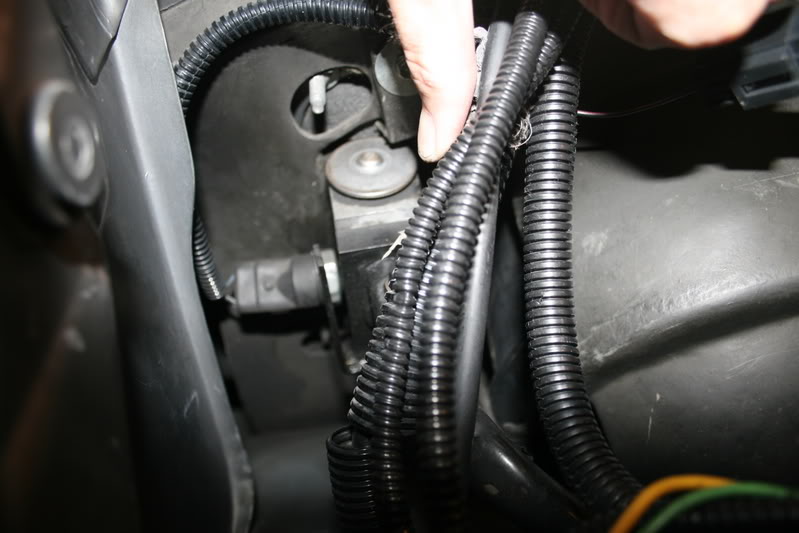
This is a different view from above the turbo.
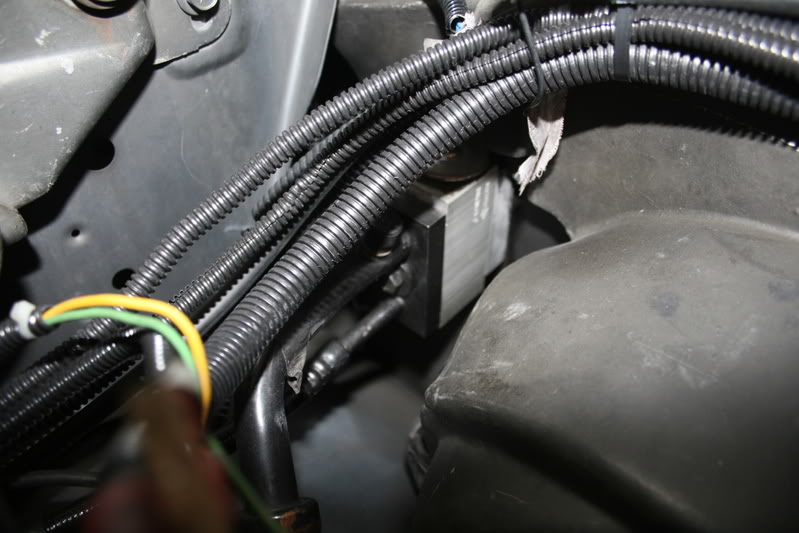
If you have a Cycling Switch it will be a small black box that will be mounted to a bracket directly alongside the H-valve. One of the mounting screws is partially visible on the bracket. This bracket is actually mounted on the end of the suction and discharge hose bracket, which is bolted to the H-valve.
There will be a 3-pin connector and a long thermistor probe that will be inserted into a well on the top side of the suction line. There should be some thermal grease on to for conduction.
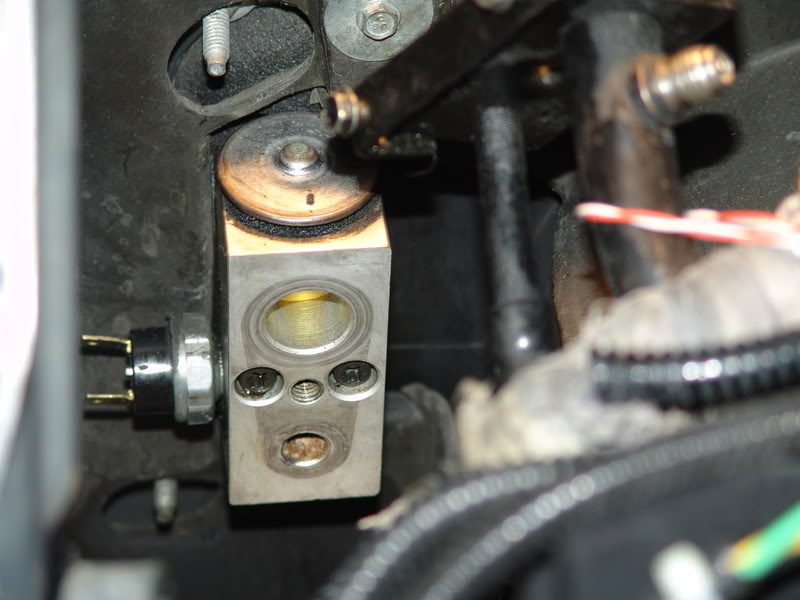
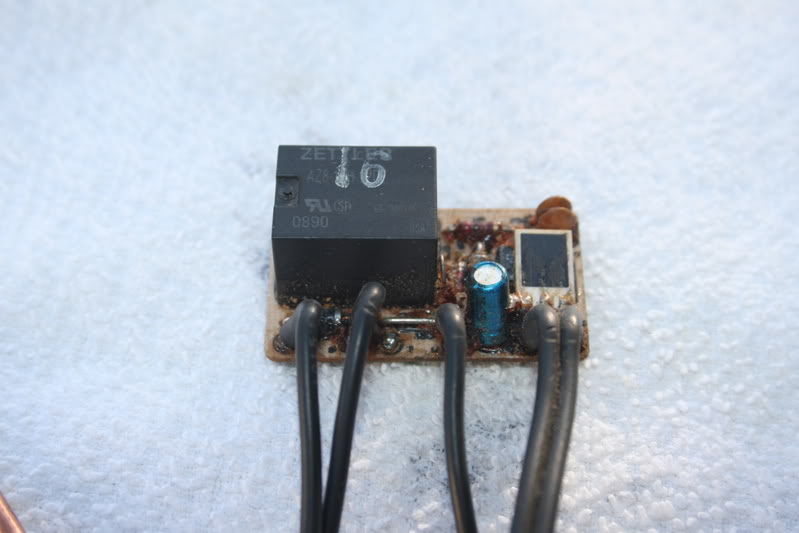
This is what the actual Cycling Switch assembly looks like, I of course took it apart so I could reverse engineer it to see if I could repair it.
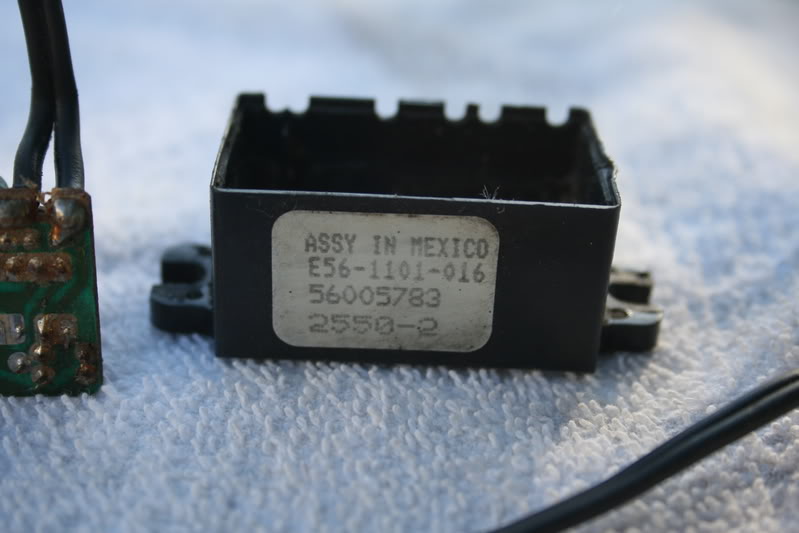
The black box is the actual dip relay that had failed along with the support components.
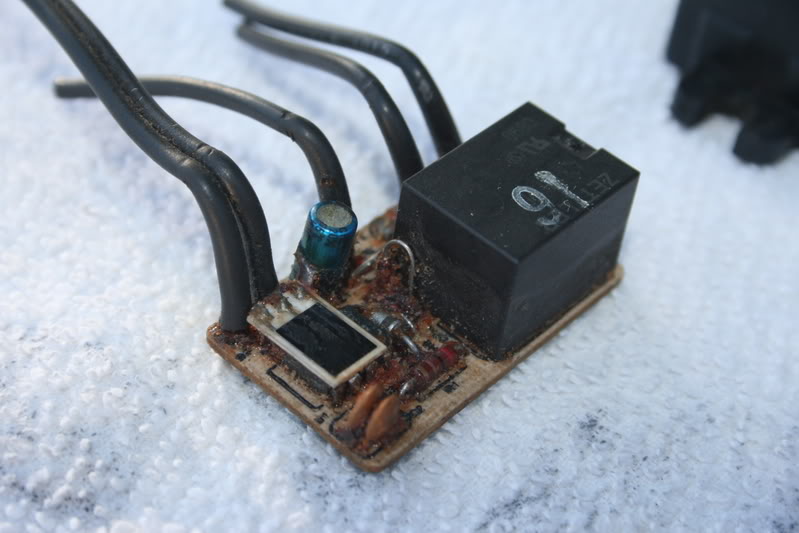
It looks quite simple seems to be a comparator circuit with a transistor to switch the relay, there is a zener diode I believe is used for a reference.
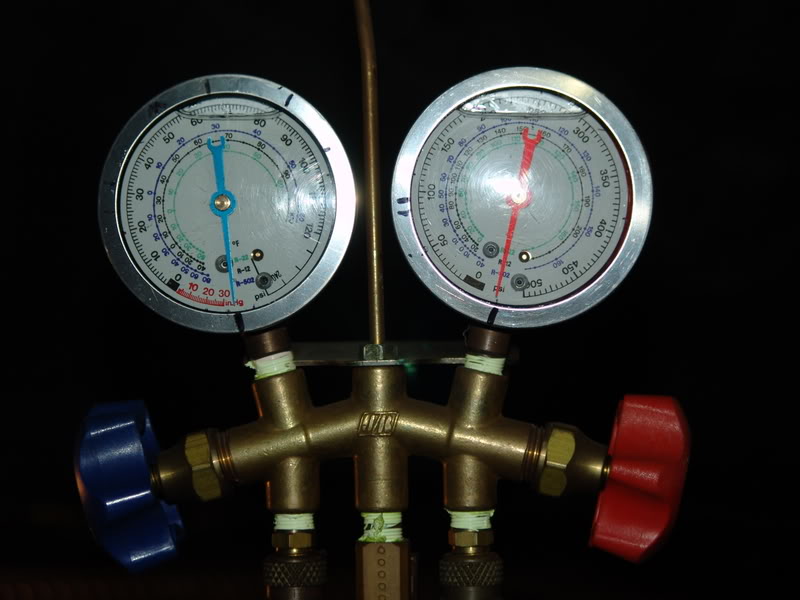
This is how low my Edwards High Vacuum pump will draw down my gauges, this will take about 10 minuets and then I will let it run for an additional 90 to 120 minuets to boil out and moisture or contaminates from the system.
I hope this clears up and confusion as to where the parts are that I am referring to in my modification. I am not sure what year trucks have these but if you do have one you could benefit from this modification.
If you have any questions I can answer please let me know.
Jim
Follow the referigent lines along the passenger side back to the firewall where it enters the H-valve, this is by your blower motor.
The switch you see on the passenger side of the H-valve is the low pressure cutout switch, this is the connector you can unplug and jumper with a paperclip to force the compressor into running so you can add your initial charges of refrigerant be it R-12, R-134A or whatever you are using.
When you are finished it is important to reconnect this switch.
This is a different view from above the turbo.
If you have a Cycling Switch it will be a small black box that will be mounted to a bracket directly alongside the H-valve. One of the mounting screws is partially visible on the bracket. This bracket is actually mounted on the end of the suction and discharge hose bracket, which is bolted to the H-valve.
There will be a 3-pin connector and a long thermistor probe that will be inserted into a well on the top side of the suction line. There should be some thermal grease on to for conduction.
This is what the actual Cycling Switch assembly looks like, I of course took it apart so I could reverse engineer it to see if I could repair it.
The black box is the actual dip relay that had failed along with the support components.
It looks quite simple seems to be a comparator circuit with a transistor to switch the relay, there is a zener diode I believe is used for a reference.
This is how low my Edwards High Vacuum pump will draw down my gauges, this will take about 10 minuets and then I will let it run for an additional 90 to 120 minuets to boil out and moisture or contaminates from the system.
I hope this clears up and confusion as to where the parts are that I am referring to in my modification. I am not sure what year trucks have these but if you do have one you could benefit from this modification.
If you have any questions I can answer please let me know.
Jim