


mecanical fuel pressure gauge isolator question


Registered User
Joined: Mar 2009
Posts: 50
Likes: 0
From: Albemarle, NC
If you run a fass/air dog put this in between the fuel line and the fitting that goes into the vp44

put this in the adapter above (part# 6820)
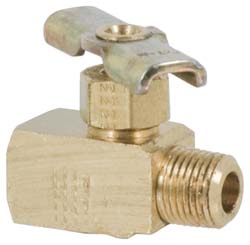
get a tube kit from a local auto parts store (same tubing used on a boost gauge)
and hook it all up
put this in the adapter above (part# 6820)
get a tube kit from a local auto parts store (same tubing used on a boost gauge)
and hook it all up


Registered User
Joined: Apr 2003
Posts: 1,346
Likes: 0
From: Backwoods of Missouri CSA
Needle valves eliminate the need for an isolator.
 I've found isolators to be nothing but trouble and you just barely have to crack the needle valve open to get a pressure reading. I've been running with a needle valve since 2004.

Registered User
Joined: Oct 2007
Posts: 1,801
Likes: 1
From: Saskaberia, SK
I also had to replace the plastic line from the needle valve to the gauge with a good 150 psi rubber diesel fuel rated hose with good hose clamps. Apparently -41 Celsius causes the plastic to crack and leak. Repeated attempts to fix caused me to say bad words when trying to fix the leaks.
The bigger diameter hose is harder to run, but at least I know I do not have leaks.
The bigger diameter hose is harder to run, but at least I know I do not have leaks.
Trending Topics


Registered User
Joined: Jun 2007
Posts: 164
Likes: 1
From: Fairfax
Toss the isolator. Just use good plumbing and a needle valve cracked just enough to get reading.
I actually use two needle valves, one like posted above at the inlet to the vp and one right at the gauge. Really only need the one at the vp, though.
I was a little paranoid when I first started running the fuel straight to the cab, but I really don't see much of a chance of this thing leaking after running it for a while now.
I actually use two needle valves, one like posted above at the inlet to the vp and one right at the gauge. Really only need the one at the vp, though.
I was a little paranoid when I first started running the fuel straight to the cab, but I really don't see much of a chance of this thing leaking after running it for a while now.

Registered User
Joined: Feb 2007
Posts: 136
Likes: 0
From: college station, TX
i ran mine strait to the cab, i had a minor pinch with a leak but that was an easy fix, i would agree with upgrading the line. i have some low quality plastic lines and i had hell installing.
Registered User
Joined: Jun 2007
Posts: 164
Likes: 1
From: Fairfax
I have my jegs liquid filled 30 psi gauge connected using 1/4" nylon lined parker fuel line with pushlock connectors. It's just like the fuel line used in the airdog setups, just smaller diameter.
I would really use either the nylon lined stuff or 1/8" copper tubing with compression fittings (making sure to leave coiled when necessary).

Registered User


Joined: May 2007
Posts: 2,161
Likes: 10
From: Sarasota, FL
Once, I changed from the plastic %$#&@! I wish I'd have gone that route in the beginning. No leaky now!