


Dual fuel trucks? military years


Thread Starter
Registered User
Joined: May 2003
Posts: 1,089
Likes: 1
Dual fuel trucks? military years
I have no experiance with these so I was curious how they work on gas or diesel? What about compression ratios aspiration fuel systems?? bla,bla. How do it know

Registered User
Joined: Nov 2001
Posts: 4,199
Likes: 1
From: Branchville, Alabama
When I was in, we had the "multi-fuel" trucks. They are essentially diesel. We had a chart on what mixes to run for different fuels. I do not remember the mixes but to use gas you added a large amount of oil, kerosene some oil, different cooking oils and other burnable fuels were listed.


Registered User
Joined: Oct 2003
Posts: 314
Likes: 1
From: on the road again
If I remember rightly, the multi's were naturally aspirated, not turbos. That would be the M-35 6x6 truck, aka Duece and a Half, from WWII, Korea and VN years. Basically a GMC gas engine that also burned diesel. The new multi's burn gasoline, diesel and natural gas or CNG.
Registered User
Joined: Nov 2001
Posts: 4,199
Likes: 1
From: Branchville, Alabama
The WWII truck was a completely different unit. In Korea they had the automatic, round nose 2 1/2, in early Vietnam they had the gas engined 2 1/2 and 5 ton trucks. These were gas, Contenintal engines, manual, not multi fuel, and had an automatic transfer case. In 1966 the multi fuel diesel, turbo, trucks started coming in. At that time the cowel stacks came out and we had to retrofit many trucks with the stack in place of the exhaust that came out between the tandems. Most likely the newer trucks were in nam sooner then Europe.
These diesels smoked like many would like the Rams to smoke, low rpm and they belched a cloud. The sheetmetal on these truck were the same, both multi fuel and gas. The front differential was a little lower ratio than the rears and when the rears would slip a sprague clutch in the transfer case would lock up and drive the front. They liked to stick and cause all sorts of problems on hard pavement. We used to back them up in S turns to free them. The duece would well out do a jeep in the mud. The single wheel three axle truck was about as good as you could get in the mud. We pulled many 151 Jeeps through bad areas. In the deep mud they would actually make three ruts, two for the wheels and the middle where the differential would drag.
When we would get them stuck, we used RT fork lifts to drag them out.
These diesels smoked like many would like the Rams to smoke, low rpm and they belched a cloud. The sheetmetal on these truck were the same, both multi fuel and gas. The front differential was a little lower ratio than the rears and when the rears would slip a sprague clutch in the transfer case would lock up and drive the front. They liked to stick and cause all sorts of problems on hard pavement. We used to back them up in S turns to free them. The duece would well out do a jeep in the mud. The single wheel three axle truck was about as good as you could get in the mud. We pulled many 151 Jeeps through bad areas. In the deep mud they would actually make three ruts, two for the wheels and the middle where the differential would drag.
When we would get them stuck, we used RT fork lifts to drag them out.

Registered User
Joined: Apr 2005
Posts: 1,162
Likes: 0
From: Denver, CO
One of my favorite military vehicles is the Oshkosh HEMTT.
8 wheel drive, 12L V8 2-stroke diesel that produces 450hp
Big and heavy, but they can go through just about ANYTHING
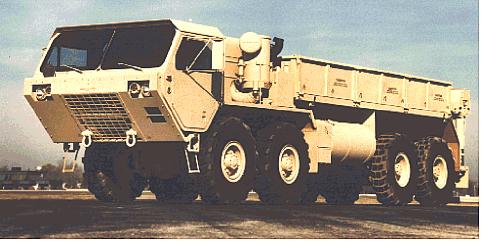
http://www.fas.org/man/dod-101/sys/land/hmett.htm
http://www.oshkoshtruck.com
8 wheel drive, 12L V8 2-stroke diesel that produces 450hp
Big and heavy, but they can go through just about ANYTHING
http://www.fas.org/man/dod-101/sys/land/hmett.htm
http://www.oshkoshtruck.com
 Ive seen them around here from local bases.
Trending Topics

Registered User
Joined: Jun 2002
Posts: 774
Likes: 1
From: West Jordan, Utah
We ran multi-fuels in the 5 ton tractor/trailer company I was a member of, in Viet Nam. We didn't run anything but diesel, but in an emergency action we were told the engines could run on just about any flamable fuel avialable. The engines had turbos, and lower compression ratios than the straight diesel trucks. I think the injector pumps had to be adjusted for the type fuel??? and engine wouldn't last long on gasoline.
The engines seemed to hold up when burning diesel for the most part, but the trucks only lasted 20 to 30k miles before they were a pile of junk. Running conveys at 40 and 50 mph on the those rough roads, with loads as heavy as 80k lbs did the frames in pretty quickly. But before the frams cracked, the fenders and everything else on the trucks were falling off. A 1 year old truck was OLD. The equipment wasn't designed for the loads it was carrying, and it was driven as fast as possible to keep the chance of an ambush down. Speed also saved drivers lives if one happened to run over a land mine. By the time the mine exploded, the damage was past the cab, and the driver usually only suffered from ringing ears for a few days.
Most of the trucks had the seals on the injector pumps broken and the fuel turned all the way up. Flames would shoot a foot out of the top of the stack, which was hooked directly to the turbo and up out of the hood. Drivers also learned how to split shift the transmission and transfer case to get a better selection of gears. Everything was pushed to its limits just trying to get the job done.
While I was there the a few straight diesel trucks, running a supposedly better engine made by Mack, were brought in. They weren't as popular with the drivers, as the multi-fuels, because they didn't have as much power.
The place this all happened was in the central highlands and the year was 67-68. I was the company 5 ton wrecker operator (it was a gasser).
The engines seemed to hold up when burning diesel for the most part, but the trucks only lasted 20 to 30k miles before they were a pile of junk. Running conveys at 40 and 50 mph on the those rough roads, with loads as heavy as 80k lbs did the frames in pretty quickly. But before the frams cracked, the fenders and everything else on the trucks were falling off. A 1 year old truck was OLD. The equipment wasn't designed for the loads it was carrying, and it was driven as fast as possible to keep the chance of an ambush down. Speed also saved drivers lives if one happened to run over a land mine. By the time the mine exploded, the damage was past the cab, and the driver usually only suffered from ringing ears for a few days.
Most of the trucks had the seals on the injector pumps broken and the fuel turned all the way up. Flames would shoot a foot out of the top of the stack, which was hooked directly to the turbo and up out of the hood. Drivers also learned how to split shift the transmission and transfer case to get a better selection of gears. Everything was pushed to its limits just trying to get the job done.
While I was there the a few straight diesel trucks, running a supposedly better engine made by Mack, were brought in. They weren't as popular with the drivers, as the multi-fuels, because they didn't have as much power.
The place this all happened was in the central highlands and the year was 67-68. I was the company 5 ton wrecker operator (it was a gasser).

Registered User
Joined: Mar 2004
Posts: 688
Likes: 0
From: Maineville, Ohio
Originally posted by Bart Timothy
The place this all happened was in the central highlands and the year was 67-68. I was the company 5 ton wrecker operator (it was a gasser).
The place this all happened was in the central highlands and the year was 67-68. I was the company 5 ton wrecker operator (it was a gasser).


Registered User


Joined: Apr 2002
Posts: 1,602
Likes: 93
From: Richmond, VA
I never ran a multi-fuel five ton, but I knew some fellows who used them for logging trucks.
My understanding from reading up on the trucks/multifuel engine, is that the engines were re-badged MAN (German) engines, through Continental. They used both naturally aspirated and turbocharged versions. The engines used a Bosch injector pump (similar to the p-pump) that was lubricated by engine oil, and had some sort of mechanism that adjusted the fuel delivery volume for the viscosity of the fuel flowing through the pump. The pistons had a spherical combustion chamber cast into the crown that allowed them to burn the lighter viscosity fuels (like gasoline and kerosene) Gasoline would condense onto the inside of the sphere, and then burn off in a more controlled manner, with-out the formation of droplets and sudden detonation that you get when trying to run gas in a regular diesel design. I have heard that some trucks were equipped with tank heaters and other devices for use with thicker fuels and vegetable oils, but I have never seen any of this equipment. That engine was only designed for use with liquid fuels as far as I know (no LPG, etc.) It did not have spark plugs or glow plugs.
By the way, we had a 5 ton that we set up with a loader and bunks for hauling logs. We bought it with the Continental gas engine: it got 2/3 mile per gallon towing a pup trailer grossing about 80k lbs. After a few years we put a Mack engine in it, and got up to about 5mpg.
My understanding from reading up on the trucks/multifuel engine, is that the engines were re-badged MAN (German) engines, through Continental. They used both naturally aspirated and turbocharged versions. The engines used a Bosch injector pump (similar to the p-pump) that was lubricated by engine oil, and had some sort of mechanism that adjusted the fuel delivery volume for the viscosity of the fuel flowing through the pump. The pistons had a spherical combustion chamber cast into the crown that allowed them to burn the lighter viscosity fuels (like gasoline and kerosene) Gasoline would condense onto the inside of the sphere, and then burn off in a more controlled manner, with-out the formation of droplets and sudden detonation that you get when trying to run gas in a regular diesel design. I have heard that some trucks were equipped with tank heaters and other devices for use with thicker fuels and vegetable oils, but I have never seen any of this equipment. That engine was only designed for use with liquid fuels as far as I know (no LPG, etc.) It did not have spark plugs or glow plugs.
By the way, we had a 5 ton that we set up with a loader and bunks for hauling logs. We bought it with the Continental gas engine: it got 2/3 mile per gallon towing a pup trailer grossing about 80k lbs. After a few years we put a Mack engine in it, and got up to about 5mpg.

Thread
Thread Starter
Forum
Replies
Last Post
pwrtripls1
1st Gen. Ram - All Topics
7
Jan 15, 2011 03:25 PM