


Which refrigerant?


Registered User
Joined: Dec 2008
Posts: 1,751
Likes: 0
Uhhhh Ohhhhhh, The guy I talked to said the R134a would mix into what ever my ac was already running. So I recharged it about two months ago. It blows colder than it was before the recharge. When should I expect to see the errors of my way. Is there any way to flush it out and recharge with the right stuff or is the damage done. Think it still needs another bottle of coolant. When I first hooked up I was showing almost no pressure.

Registered User
Joined: Dec 2005
Posts: 334
Likes: 2
From: Preston County, WV
My a/c quit working right after I got my truck so I bought some r134a and put a coulpe of cans in it and it started working, it still has a slow leak, but only needs one of the small cans every year and a half or so. I don't think it was ever converted because it didn't have the adapter valves on it yet, but it has been working 4 years now. I agree that r12 is more efficient, but it's just to expensive, and not as easy to get ahold of anymore.
Chris
Chris

Registered User
Joined: Nov 2007
Posts: 780
Likes: 42
I guess it was confusing b/c the FSM shows the low side pressure range of 22-50 psi. So, it would look like it is undercharged by the pressures. Nice gauges.
For all those running R134a, the type of oil is key to a long compressor life. Failure to use the correct oil and it voids the warrentee. It's fairly easy to get hoses rebuilt or replace them. I would encourage it over topping up the system. I've had crimped saturated old hoses come loose on conversion-not fun.
My system is R-12 and working within the range of the FSM- just not the lower end. I think it is marginal right now(satisfactory). I think on Max A/C, with it being 80F outside the temp of truck should get lower- the vent temp should come down toward 38F or so. It doesn't.
Jim- I could have sold you a USA made Sanden with a full charge of R-12 for less $$.
Michael
For all those running R134a, the type of oil is key to a long compressor life. Failure to use the correct oil and it voids the warrentee. It's fairly easy to get hoses rebuilt or replace them. I would encourage it over topping up the system. I've had crimped saturated old hoses come loose on conversion-not fun.
My system is R-12 and working within the range of the FSM- just not the lower end. I think it is marginal right now(satisfactory). I think on Max A/C, with it being 80F outside the temp of truck should get lower- the vent temp should come down toward 38F or so. It doesn't.
Jim- I could have sold you a USA made Sanden with a full charge of R-12 for less $$.
Michael

Administrator


Joined: Nov 2004
Posts: 4,084
Likes: 235
From: Southern California

I guess it was confusing b/c the FSM shows the low side pressure range of 22-50 psi. So, it would look like it is undercharged by the pressures. Nice gauges.
22-50 PSI but at what ambient temperature, under hood temps can easly be 120*
That could be a matter of only 5* temperature diffrence.
80* = 84 PSI
85* = 92 PSI
90* = 100 PSI
95* = 105 PSI
100* = 117 PSI
120* = 158 PSI
That is what I was saying about this recharge, I charged it only until the sight glass cleared of any bubbles and was a clear stream that has always been an acceptable method regardless of the weight of the refrigerant
If I install a sight glass on a residential A/C that is the way that I will charge it till there is a solid stream.
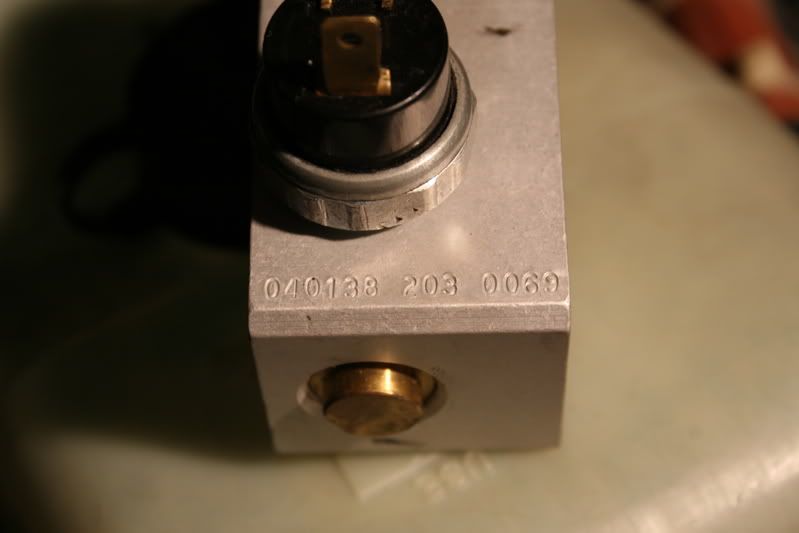
Suction pressure will also change with the restrictor, I have replaced my H-Valve with this unit, and this part number did not fit the application for my year.
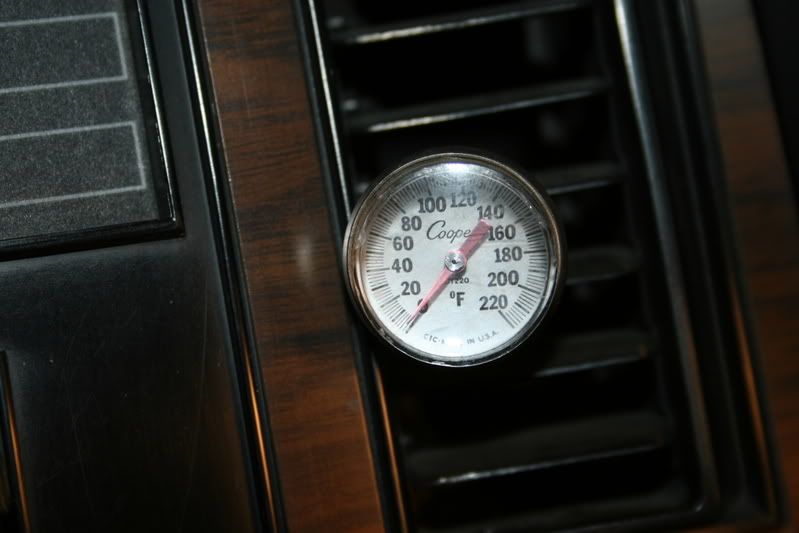
Without charging by the sight glass I added 48 ounces of R-12 and was able to get these vent temperatures consistently as long as I had a decent flow of air through the condenser.
I have 4 sets of gauges, these are made by Tif, I like the front hand wheels but I do not like the provisions to hang the hoses when they are not in use, I like to keep them tightly capped when they are not in use, I also need to get some hoses longer than 48” for this set.
For all those running R134a, the type of oil is key to a long compressor life. Failure to use the correct oil and it voids the warrentee. It's fairly easy to get hoses rebuilt or replace them. I would encourage it over topping up the system. I've had crimped saturated old hoses come loose on conversion-not fun.
I think the answer to this in the first sentence; working at higher pressures will cause accelerated wear on the compressor.
http://www.sanden.com/images/retro.pdf
I need to replace the hoses on my truck, they are nor in bad shape but they get all of the heat from the turbo and they are getting a bit hard.
My system is R-12 and working within the range of the FSM- just not the lower end. I think it is marginal right now(satisfactory). I think on Max A/C, with it being 80F outside the temp of truck should get lower- the vent temp should come down toward 38F or so. It doesn't.
We were all in the truck today and it was 92* out and my wife said to turn the air conditioner off because it was getting too cold in here.
I actually get this complaint allot, another reason for my AC working so well is I have well insulated my cab and floorboard, it is amazing how much heat enters from the floor above the exhaust on these trucks.
Jim- I could have sold you a USA made Sanden with a full charge of R-12 for less $$.
Michael
22-50 PSI but at what ambient temperature, under hood temps can easly be 120*
That could be a matter of only 5* temperature diffrence.
80* = 84 PSI
85* = 92 PSI
90* = 100 PSI
95* = 105 PSI
100* = 117 PSI
120* = 158 PSI
That is what I was saying about this recharge, I charged it only until the sight glass cleared of any bubbles and was a clear stream that has always been an acceptable method regardless of the weight of the refrigerant
If I install a sight glass on a residential A/C that is the way that I will charge it till there is a solid stream.
Suction pressure will also change with the restrictor, I have replaced my H-Valve with this unit, and this part number did not fit the application for my year.
Without charging by the sight glass I added 48 ounces of R-12 and was able to get these vent temperatures consistently as long as I had a decent flow of air through the condenser.
I have 4 sets of gauges, these are made by Tif, I like the front hand wheels but I do not like the provisions to hang the hoses when they are not in use, I like to keep them tightly capped when they are not in use, I also need to get some hoses longer than 48” for this set.
For all those running R134a, the type of oil is key to a long compressor life. Failure to use the correct oil and it voids the warrentee. It's fairly easy to get hoses rebuilt or replace them. I would encourage it over topping up the system. I've had crimped saturated old hoses come loose on conversion-not fun.
I think the answer to this in the first sentence; working at higher pressures will cause accelerated wear on the compressor.
http://www.sanden.com/images/retro.pdf
I need to replace the hoses on my truck, they are nor in bad shape but they get all of the heat from the turbo and they are getting a bit hard.
My system is R-12 and working within the range of the FSM- just not the lower end. I think it is marginal right now(satisfactory). I think on Max A/C, with it being 80F outside the temp of truck should get lower- the vent temp should come down toward 38F or so. It doesn't.
We were all in the truck today and it was 92* out and my wife said to turn the air conditioner off because it was getting too cold in here.
I actually get this complaint allot, another reason for my AC working so well is I have well insulated my cab and floorboard, it is amazing how much heat enters from the floor above the exhaust on these trucks.
Jim- I could have sold you a USA made Sanden with a full charge of R-12 for less $$.
Michael
The Sanden has a different mount than the C-171 and the ports are on the rear instead of on the top.
I was not too happy about the compressor being made in China.
Jim

Registered User
Joined: Jan 2008
Posts: 7,547
Likes: 2
From: Quinton, New Jersey (middle of nowhere)
How the heck are you guys putting r134 right into your trucks??
the r12 fittings are way smaller and the r134 thing like you buy at walmart doesn't even fit on it? ya'll's trucks must already be converted like kc8ksg
the r12 fittings are way smaller and the r134 thing like you buy at walmart doesn't even fit on it? ya'll's trucks must already be converted like kc8ksg
Registered User
Joined: Nov 2007
Posts: 780
Likes: 42
Jim,
Thanks for the detailed response. Unfortunatly, the drier from NAPA didn't have a sight=glass... maybe I should check again.
Mine is a I/C model and the compressor comes with a full charge of mineral oil. Made in China- is it by Sanden, or a knock-off? I purchased the last 2 in the Sanden warehouse last year and he made me a good deal. Actually, they came from Omega.
I did borrow dry nitrogen and leak check my system before evacuating with the new drier- found a bad o-ring on the low side switch.
Do you understand the thermal cycling switch? How's the probe work? I'm asking as on some Mercedes, the control unit was simple and you could add a resistor to the circuit telling it was a few degrees warmer. If memory is close- you could take 43-48 F down to 36-38F vent with the tweek. I'm thinking something similar might be in order here. FSM says the switch should be closed above 45F. I need to figure out when the switch opens temp wise.
Since I'm on the low-end of performance, I'm leaning toward too much oil in the system. I'll probably R&R the dryer again to get rid of another 1-2 oz of oil. Maybe blow a little air through...
I do very similar with charging and a sightglass. Did you put a thermal couple on the outlet line and figure out how much superheat it's getting? I ussually like to just see a wisp of bubbles in the site glass as the expansion valve and compressor cycle.
I have a submicron gauge, and old set of yellow jacket pump. I got a new robin air vacuum pump. It is erratic on it's vacuum- I think they must have damaged an o-ring assembling it. Warrentee is gone and I need to find a robin air repair center to get a few o-rings.
Michael
Thanks for the detailed response. Unfortunatly, the drier from NAPA didn't have a sight=glass... maybe I should check again.
Mine is a I/C model and the compressor comes with a full charge of mineral oil. Made in China- is it by Sanden, or a knock-off? I purchased the last 2 in the Sanden warehouse last year and he made me a good deal. Actually, they came from Omega.
I did borrow dry nitrogen and leak check my system before evacuating with the new drier- found a bad o-ring on the low side switch.
Do you understand the thermal cycling switch? How's the probe work? I'm asking as on some Mercedes, the control unit was simple and you could add a resistor to the circuit telling it was a few degrees warmer. If memory is close- you could take 43-48 F down to 36-38F vent with the tweek. I'm thinking something similar might be in order here. FSM says the switch should be closed above 45F. I need to figure out when the switch opens temp wise.
Since I'm on the low-end of performance, I'm leaning toward too much oil in the system. I'll probably R&R the dryer again to get rid of another 1-2 oz of oil. Maybe blow a little air through...
I do very similar with charging and a sightglass. Did you put a thermal couple on the outlet line and figure out how much superheat it's getting? I ussually like to just see a wisp of bubbles in the site glass as the expansion valve and compressor cycle.
I have a submicron gauge, and old set of yellow jacket pump. I got a new robin air vacuum pump. It is erratic on it's vacuum- I think they must have damaged an o-ring assembling it. Warrentee is gone and I need to find a robin air repair center to get a few o-rings.
Michael
Administrator
Joined: Nov 2004
Posts: 4,084
Likes: 235
From: Southern California
Jim,
Thanks for the detailed response. Unfortunatly, the drier from NAPA didn't have a sight=glass... maybe I should check again.
Check the top of the drier; mine was covered with a piece of tape to mask it when it was painted.
Mine is a I/C model and the compressor comes with a full charge of mineral oil. Made in China- is it by Sanden, or a knock-off? I purchased the last 2 in the Sanden warehouse last year and he made me a good deal. Actually, they came from Omega.
Sometimes the oil in the crankcase is for shipping I drained all of the oil out of mine and then added the proper amount, there is no way what I removed was 2 ounces.
I did borrow dry nitrogen and leak check my system before evacuating with the new drier- found a bad o-ring on the low side switch.
Do you understand the thermal cycling switch? How's the probe work? I'm asking as on some Mercedes, the control unit was simple and you could add a resistor to the circuit telling it was a few degrees warmer. If memory is close- you could take 43-48 F down to 36-38F vent with the tweek. I'm thinking something similar might be in order here. FSM says the switch should be closed above 45F. I need to figure out when the switch opens temp wise.
I do not see why you need the cycling switch, it has nothing to do with the control of the temperature inside the cabin it is only supposed to open the clutch circuit when it thinks is going to ice up but I do not know what temp it was set for. I guess I could clamp on a thermocouple to the suction line and see how cold it gets before it ices up maybe if I turn down the blower speed.
Most all of the hang on A/C units had an expansion valve to throttle the refrigerant and the temp control was with a capillary tube stuck in the fins of the evaporator.
This is what I might put on mine so I can regulate the temps by cycling the compressor when the family is in the truck.
Since I'm on the low-end of performance, I'm leaning toward too much oil in the system. I'll probably R&R the dryer again to get rid of another 1-2 oz of oil. Maybe blow a little air through...
I do very similar with charging and a sightglass. Did you put a thermal couple on the outlet line and figure out how much superheat it's getting? I ussually like to just see a wisp of bubbles in the site glass as the expansion valve and compressor cycle.
No I havent.
I have a submicron gauge, and old set of yellow jacket pump. I got a new robin air vacuum pump. It is erratic on it's vacuum- I think they must have damaged an o-ring assembling it. Warrentee is gone and I need to find a robin air repair center to get a few o-rings.
Michael
Thanks for the detailed response. Unfortunatly, the drier from NAPA didn't have a sight=glass... maybe I should check again.
Check the top of the drier; mine was covered with a piece of tape to mask it when it was painted.
Mine is a I/C model and the compressor comes with a full charge of mineral oil. Made in China- is it by Sanden, or a knock-off? I purchased the last 2 in the Sanden warehouse last year and he made me a good deal. Actually, they came from Omega.
Sometimes the oil in the crankcase is for shipping I drained all of the oil out of mine and then added the proper amount, there is no way what I removed was 2 ounces.
I did borrow dry nitrogen and leak check my system before evacuating with the new drier- found a bad o-ring on the low side switch.
Do you understand the thermal cycling switch? How's the probe work? I'm asking as on some Mercedes, the control unit was simple and you could add a resistor to the circuit telling it was a few degrees warmer. If memory is close- you could take 43-48 F down to 36-38F vent with the tweek. I'm thinking something similar might be in order here. FSM says the switch should be closed above 45F. I need to figure out when the switch opens temp wise.
I do not see why you need the cycling switch, it has nothing to do with the control of the temperature inside the cabin it is only supposed to open the clutch circuit when it thinks is going to ice up but I do not know what temp it was set for. I guess I could clamp on a thermocouple to the suction line and see how cold it gets before it ices up maybe if I turn down the blower speed.
Most all of the hang on A/C units had an expansion valve to throttle the refrigerant and the temp control was with a capillary tube stuck in the fins of the evaporator.
This is what I might put on mine so I can regulate the temps by cycling the compressor when the family is in the truck.
Since I'm on the low-end of performance, I'm leaning toward too much oil in the system. I'll probably R&R the dryer again to get rid of another 1-2 oz of oil. Maybe blow a little air through...
I do very similar with charging and a sightglass. Did you put a thermal couple on the outlet line and figure out how much superheat it's getting? I ussually like to just see a wisp of bubbles in the site glass as the expansion valve and compressor cycle.
No I havent.
I have a submicron gauge, and old set of yellow jacket pump. I got a new robin air vacuum pump. It is erratic on it's vacuum- I think they must have damaged an o-ring assembling it. Warrentee is gone and I need to find a robin air repair center to get a few o-rings.
Michael
Then I have 2 JB manifolds with liquid filled gauges, one of the High side gauges the tip of the plug broke and most of the glycerin leaked out at a job, if I can remember where I left the bottle of glycerin I will clean and refill both of them.
And then my newest set is from Tif and they are the ones you see in the last pictures.
I have 3 commercial Vacuum pumps, my oldest one is a Robinair, I have a very heavy 2 stage Welch and I recently bought an Edwards E2M2 from an Equipment Surplus off from an Electron Microscope for I think it was $100.00 he had no idea what it was.
I have several charging cylinders and a digital charging scale.
Also many other test instruments.
Jim
Registered User
Joined: Dec 2008
Posts: 1,751
Likes: 0
Mine must be. I bought the stuff in the blue can that comes with the little guage and hose. Walked out in the parking lot, popped the hood and emptied the can then went back for a second. By the chart on the can I could probably use another. I was using the small cans becuase I didnt know how much it would take. Two cans just barely got it to 25 psi.

Registered User
Joined: Nov 2001
Posts: 908
Likes: 0
From: tennessee
which refrigerant
Well, for starters that particular link is local pick-up only in Chicago, and you need an EPA cert (which I assume most people don't have).
Is there any on there that will ship/sell to CA, and not require a cert ? ( I Cant search from here)
I would gladly pay $100 for 30lbs, and switch back. Our systems take what... a little over 3lbs to charge ? Shops around here wanted over $300 to do it.
In my limited experience R12 has always worked better than 134. Even our newer cars that came with 134 from the factory don't seem as cold as a properly functioning R12 system.
Is there any on there that will ship/sell to CA, and not require a cert ? ( I Cant search from here)
I would gladly pay $100 for 30lbs, and switch back. Our systems take what... a little over 3lbs to charge ? Shops around here wanted over $300 to do it.
In my limited experience R12 has always worked better than 134. Even our newer cars that came with 134 from the factory don't seem as cold as a properly functioning R12 system.


Thread
Thread Starter
Forum
Replies
Last Post
jesussaves
1st Gen. Ram - All Topics
5
May 26, 2009 08:51 PM
toypar
3rd Generation Ram - Non Drivetrain - All Years
15
Aug 3, 2006 06:05 PM