


Head Porting


Thread Starter
Registered User
Joined: Apr 2006
Posts: 386
Likes: 0
From: Arizona
Head Porting
Any info out there on how you should port a cummins head? I've done some cleanup on sb chevy heads in my younger days but I think it's different, right? Anyway I can't seem to find anything on how to for the cummins. Any info out there?
Thanks
Mike
Thanks
Mike

Registered User
Joined: Mar 2008
Posts: 4,389
Likes: 114
From: Orange County, California
yeah, i have no knowledge of to what extent but i have heard of guys opening both the exhaust and intake bowls. of course, you'd need the head off in order to remove the valves and do just that.

1st Generation Admin
Joined: Jan 2005
Posts: 4,601
Likes: 118
From: Buies Creek, NC
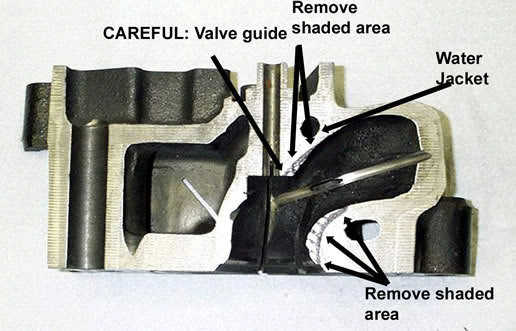
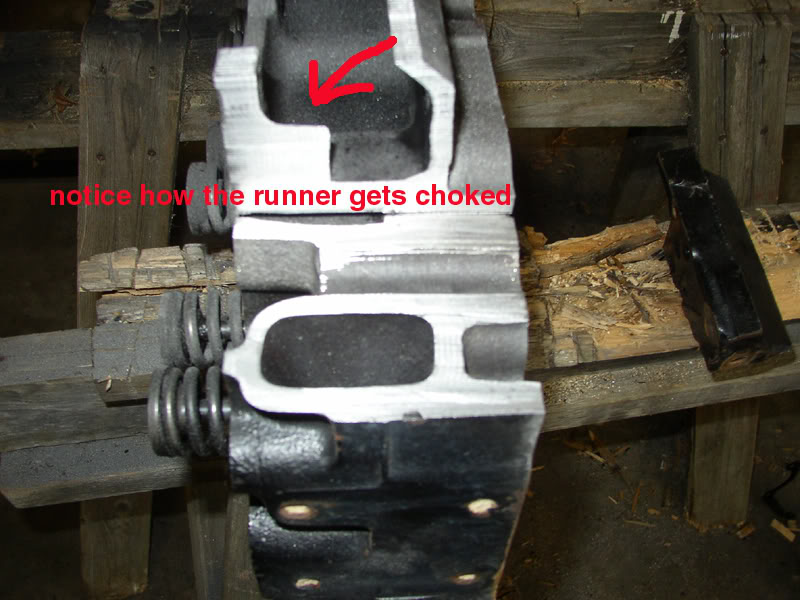
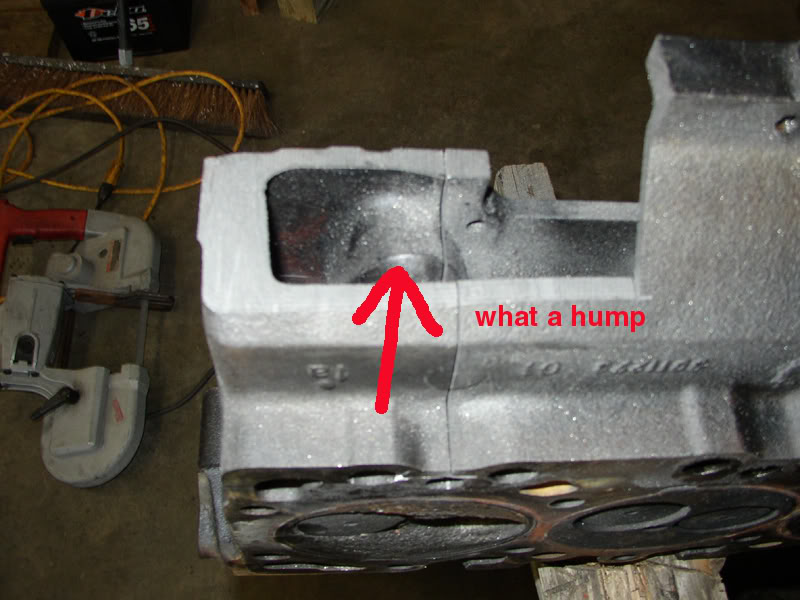
Unless you're cutting off the intake log, then you're left with cleaning up the intake bowls.
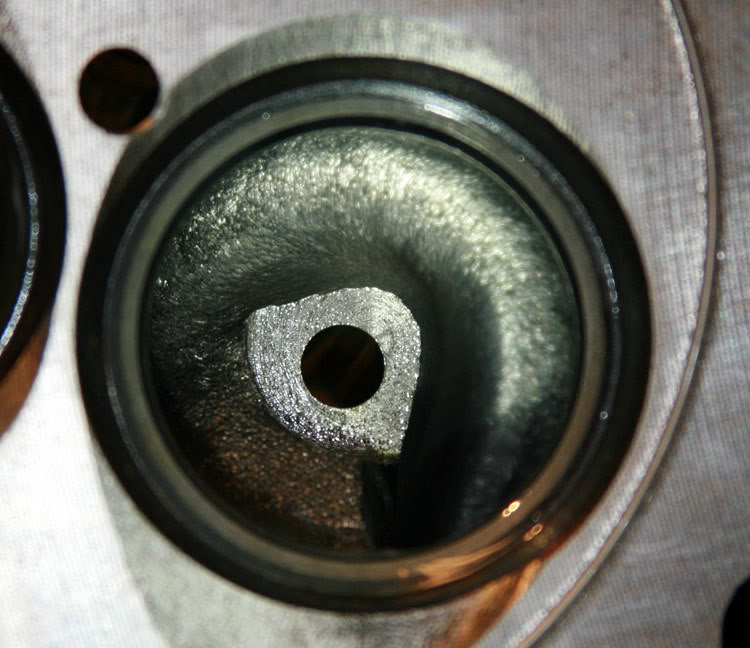
Else, it looks like straightening up the exhaust port.
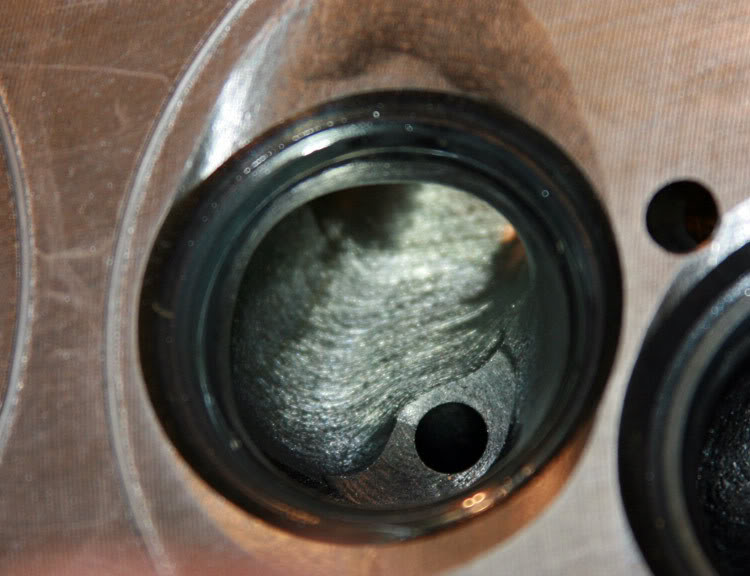
Notice the exhaust port is not gasket matched. I think such goes toward keeping exhaust gas velocities up.
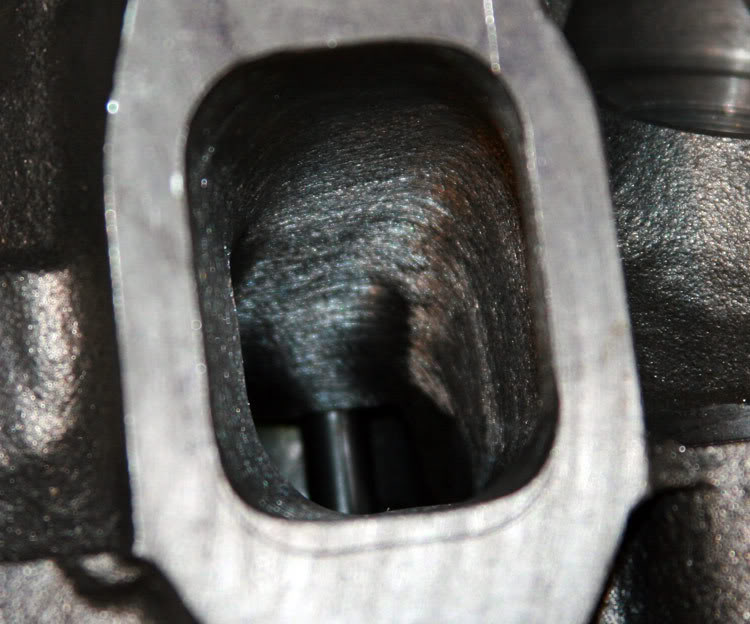
Consider getting your valves back-cut also.
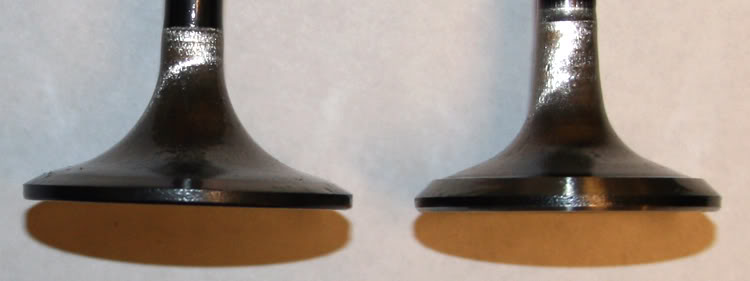
Else, it looks like straightening up the exhaust port.
Notice the exhaust port is not gasket matched. I think such goes toward keeping exhaust gas velocities up.
Consider getting your valves back-cut also.
Trending Topics


Registered User
Joined: Jan 2008
Posts: 690
Likes: 0
From: Vancouver island
BC, I wish I had of seen those pics last week  But thanks!
I went with a basic bowl blend/cleanup with mine. Huge improvement on the short side of the runner. I was afraid of going too far because of head structure, and water, but those pics are worth 1000 words...
Mike T: If your running the stock manifold, they shrink, I used the soot line as a guide to open the ports up.
Does anybody make a reduced stem valve for these heads? cant remember the exact name for them...
But thanks! I went with a basic bowl blend/cleanup with mine. Huge improvement on the short side of the runner. I was afraid of going too far because of head structure, and water, but those pics are worth 1000 words...
Mike T: If your running the stock manifold, they shrink, I used the soot line as a guide to open the ports up.
Does anybody make a reduced stem valve for these heads? cant remember the exact name for them...

Registered User


Joined: Sep 2004
Posts: 4,053
Likes: 135
From: Tijeras, New Mexico, 7,000ft up
Notes:
In a naturally aspirated gasser, the short side radius is critical to keep from creating a low pressure right before the inlet that causes the fuel to come out of suspension. Also in a net asp gasser, you want to leave the "as-cast" surface to keep port velocities up (think golf ball).
On a pressurized engine, you want the ports as large, open and smooth as you can get them. You can see this looking at a carbureted HEMI head versus one prepped for a blower motor.
In a naturally aspirated gasser, the short side radius is critical to keep from creating a low pressure right before the inlet that causes the fuel to come out of suspension. Also in a net asp gasser, you want to leave the "as-cast" surface to keep port velocities up (think golf ball).
On a pressurized engine, you want the ports as large, open and smooth as you can get them. You can see this looking at a carbureted HEMI head versus one prepped for a blower motor.
1st Generation Admin
Joined: Jan 2005
Posts: 4,601
Likes: 118
From: Buies Creek, NC
Something to also consider:
How much time do our engines run at WOT boost?
- The less forced induction, the more natural induction. (We just don't have to worry about keeping the fuel entrained as in the case of a gasser).
Certainly a larger pipe is gonna flow more, but that's also just that much more we have to pressurize, hence, Lag.
How much time do our engines run at WOT boost?
- The less forced induction, the more natural induction. (We just don't have to worry about keeping the fuel entrained as in the case of a gasser).
Certainly a larger pipe is gonna flow more, but that's also just that much more we have to pressurize, hence, Lag.
Registered User
Joined: Sep 2004
Posts: 4,053
Likes: 135
From: Tijeras, New Mexico, 7,000ft up
You gotta remember that there is no throttle body, so every time a piston sweeps the volume with the intake valve open you get a large volume of air moving through the inlet (and out of the exhaust). So with a diesel, smooth, unrestricted flow is even more important. As far as lag, it might take a split second longer to pressurize a larger exhaust volume if the restriction on the end is the save size as before (the exhuast housing in the turbo).
But I promise you if I turn out to be all wrong about this I will fess up!
But I promise you if I turn out to be all wrong about this I will fess up!

Registered User
Joined: Aug 2008
Posts: 1,450
Likes: 0
From: West Palm Beach, Florida
Notes:
In a naturally aspirated gasser, the short side radius is critical to keep from creating a low pressure right before the inlet that causes the fuel to come out of suspension. Also in a net asp gasser, you want to leave the "as-cast" surface to keep port velocities up (think golf ball).
On a pressurized engine, you want the ports as large, open and smooth as you can get them. You can see this looking at a carbureted HEMI head versus one prepped for a blower motor.
In a naturally aspirated gasser, the short side radius is critical to keep from creating a low pressure right before the inlet that causes the fuel to come out of suspension. Also in a net asp gasser, you want to leave the "as-cast" surface to keep port velocities up (think golf ball).
On a pressurized engine, you want the ports as large, open and smooth as you can get them. You can see this looking at a carbureted HEMI head versus one prepped for a blower motor.
 Ok, so the crown will help create turbulence, but there is still going to be unburnt fuel in there = inefficient combustion = not realising full heat potential = wasted $$$, (that was a mouthful!)
 I'm not questioning you, Mhuppertz, I'm just trying to get this straight. We're learning all this stuff in school, so I want to understand it. I need to get it through my head
 !!
!!

Registered User

Joined: Aug 2007
Posts: 1,387
Likes: 6
From: Ida Grove, IA
Everyone I have talked to stresses swirl. If you reduce or mess up the swirl it leads to reversion up the intake side.
Mainly you want to open up the valve pockets. I opened up the exhaust ports, too. We are shooting for high RPM power rather than low end spool up though.
I just got done doing one for the puller, my first experience at head porting. I spend probably 40-50 hours on it. It just takes time and practice. The next one will be faster. I used 6" long carbides, then a Standard Abrasives kits to smooth it up.
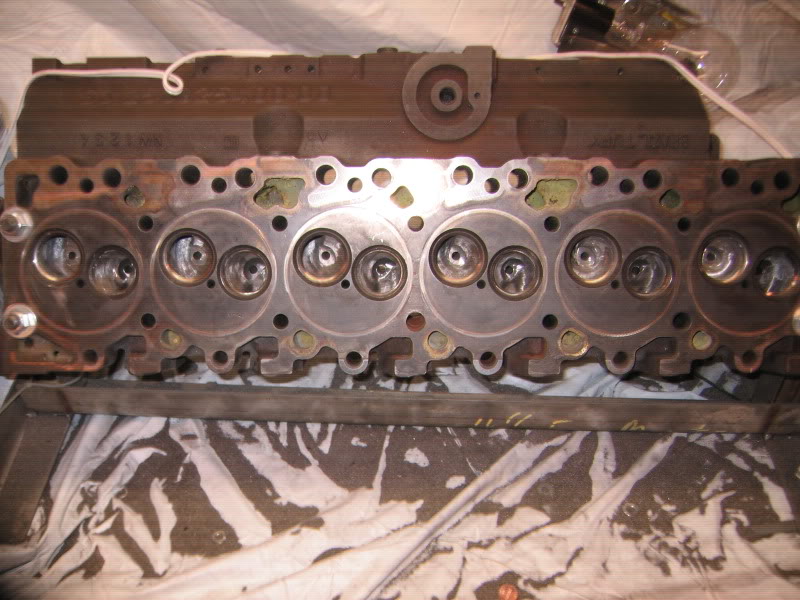
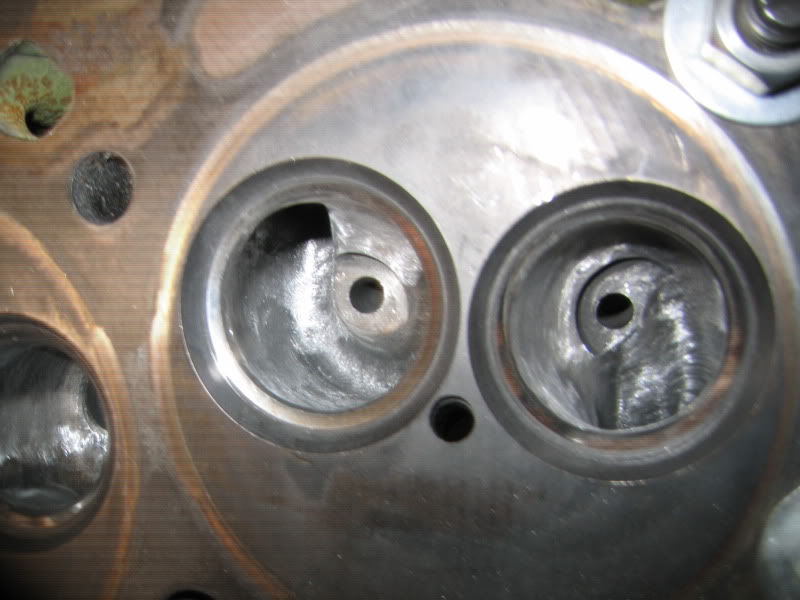
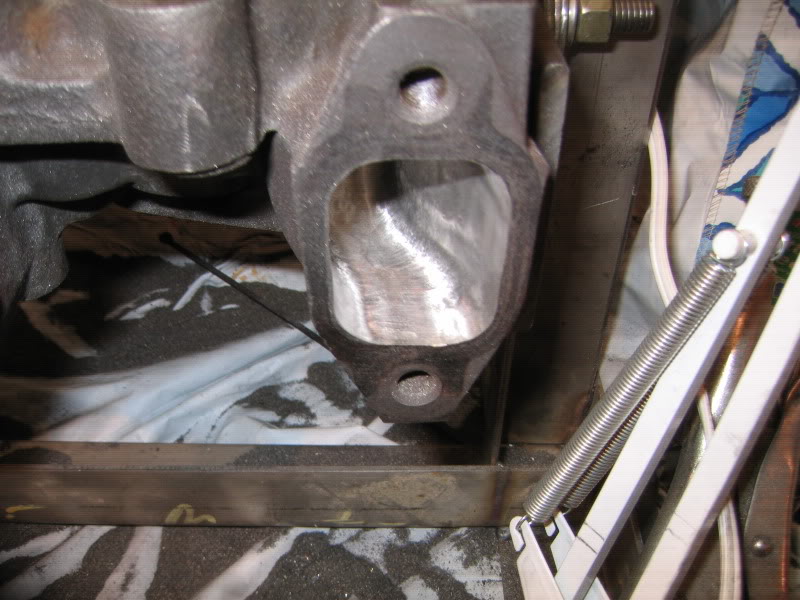
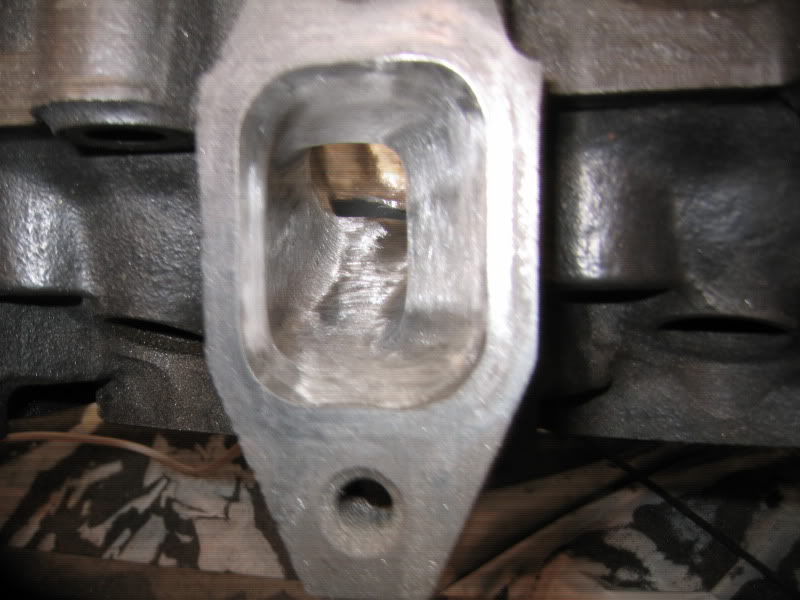
Mainly you want to open up the valve pockets. I opened up the exhaust ports, too. We are shooting for high RPM power rather than low end spool up though.
I just got done doing one for the puller, my first experience at head porting. I spend probably 40-50 hours on it. It just takes time and practice. The next one will be faster. I used 6" long carbides, then a Standard Abrasives kits to smooth it up.