


CryO2


Thread Starter
Administrator


Joined: Nov 2004
Posts: 4,084
Likes: 235
From: Southern California
 CryO2
CryO2
I was at a local car show and I saw this race truck. Although it was powered with a Powerstroke it had some really impressive engineering, what really caught my attention was the remote intercooler and the Cryo2 cryogenic cooler.
I know a few of our members here have tried chilling the intercooler using Co2 but what was really intriguing was the intake cooler a cryogenic chamber suspended within the intake system extracting the heat as the incoming air passes over it.

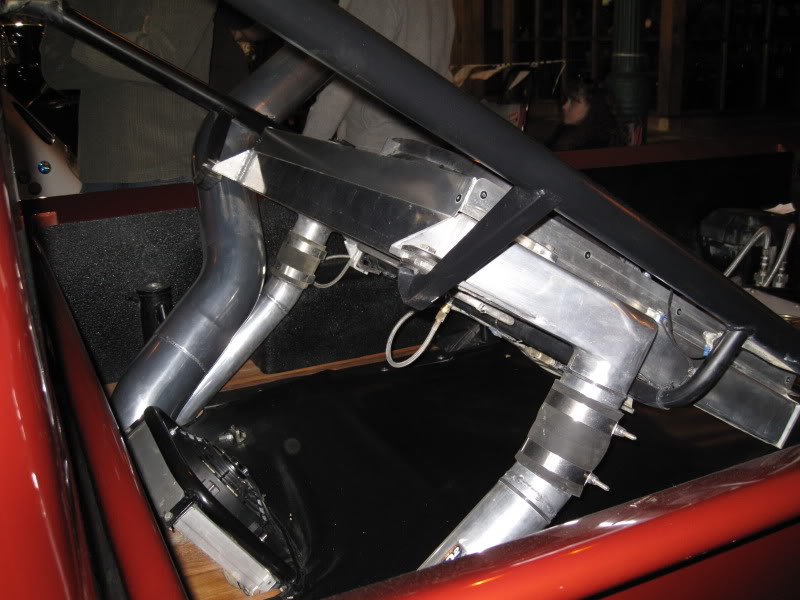

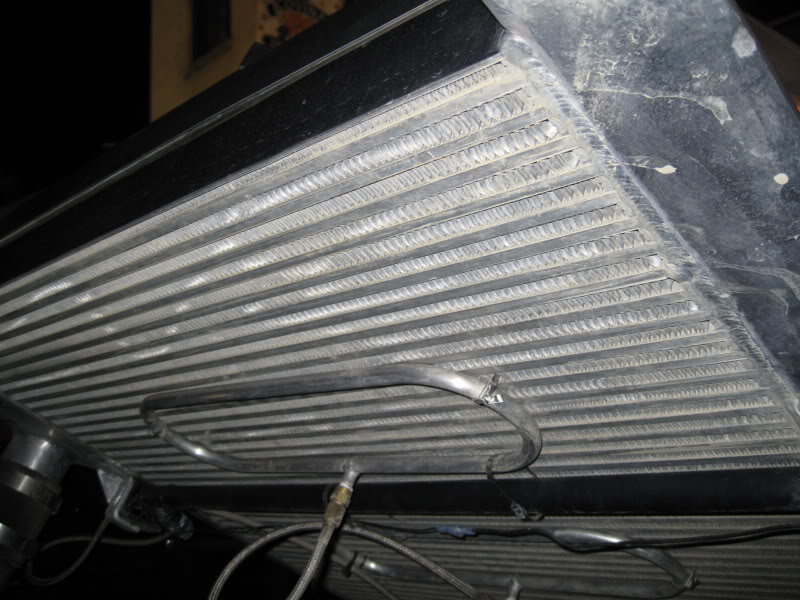
Has anyone ever tried this Cry02 system or know how it works?
http://www.designengineering.com/pro...asp?m=sc&cid=1
Cryo2 Cryogenic Air Intake System.
Click on the FAQ’s and see how the intake coolers work it claims the cryo setup will drop the air temperature by more than 50 degrees.
http://www.designengineering.com/pro...sp&pid=4&tid=1
Again I have no affiliation with this company or its products but I thought you might be interested.
Jim
I know a few of our members here have tried chilling the intercooler using Co2 but what was really intriguing was the intake cooler a cryogenic chamber suspended within the intake system extracting the heat as the incoming air passes over it.
Has anyone ever tried this Cry02 system or know how it works?
http://www.designengineering.com/pro...asp?m=sc&cid=1
Cryo2 Cryogenic Air Intake System.
Click on the FAQ’s and see how the intake coolers work it claims the cryo setup will drop the air temperature by more than 50 degrees.
http://www.designengineering.com/pro...sp&pid=4&tid=1
Again I have no affiliation with this company or its products but I thought you might be interested.
Jim

Registered User
Joined: Apr 2007
Posts: 666
Likes: 0
From: Central Mi
Jim,
The way I understand their ad is the intake tube itself has something inside it that the CO2 passes through thus cooling the intake air.
Makes sense that you could put a piece of ice just before the manifold and it would do the most efficient job of cooling the incoming air....
The intercoolers we use cool the outside of the pipes, they do cool the air in the center of the pipe some but the most cooling is done on the outside of the airflow.
My concern is that we're using 3" intake tract to get maximum air flow, and they want to put something in the middle of the airflow. Hmmmmm
Possibly by going to a 3 1/2" pipe just prior to the manifold and then having a 1/2" pipe suspended lengthwise in the middle of it might not disturb the airflow too much. Then pipe CO2 through the 1/2" pipe and you should get some drop in temp....
Would be interesting to see some actual airflow numbers...
1-only 3" pipe
2-3 1/2" pipe with the 'bulb' inside
3-only 3 1/2" pipe
Then we'd have some comparison...
The way I understand their ad is the intake tube itself has something inside it that the CO2 passes through thus cooling the intake air.
Makes sense that you could put a piece of ice just before the manifold and it would do the most efficient job of cooling the incoming air....
The intercoolers we use cool the outside of the pipes, they do cool the air in the center of the pipe some but the most cooling is done on the outside of the airflow.
My concern is that we're using 3" intake tract to get maximum air flow, and they want to put something in the middle of the airflow. Hmmmmm
Possibly by going to a 3 1/2" pipe just prior to the manifold and then having a 1/2" pipe suspended lengthwise in the middle of it might not disturb the airflow too much. Then pipe CO2 through the 1/2" pipe and you should get some drop in temp....
Would be interesting to see some actual airflow numbers...
1-only 3" pipe
2-3 1/2" pipe with the 'bulb' inside
3-only 3 1/2" pipe
Then we'd have some comparison...

Registered User
Joined: Nov 2007
Posts: 1,816
Likes: 0
From: Maine
http://www.designengineering.com/pro...asp?m=sp&pid=5
This seems to be what he is running, two of these. They are just an external nozzle ring assembly that sprays CO2 onto the regular intercooler. Just instead of a huge horn from a fire extinguisher, this may have a better spray pattern.
I believe this internal "bulb" is just another product they offer probably for people with no room for an intercooler (like a little ricer).
I'm pretty sure some Ford Lightenings or maybe it was the GMC Typhoons used to have a refrigerant to air intercooler. Yes, there is a parasitic load on the engine to compress the refrigerant, but I guess the load was justified in the lower charge air temps.
I don't see how a single bulb in the middle of the air stream could be more efficient than the set up this guy has. Spraying cold CO2 onto a huge, finned surface area like that seems far superior. Just like putting a big cube of ice in a drink. It will melt slower than the same amount of ice that is crushed into the same temperature and volumed drink. Just like that bulb wont have heat rejected to it quicker than the entire, large intercooler.
And intercoolers fully cool your air charge. There is no way your boost is a laminar flow throughout the intercooler tubes. The mass and velocity of the air running through those little tubes would have a large Reynolds number, and would definately be turbulent. You actually WANT it to be turbulent to break up the biggest detrimental to exchanged heat; a stagnant layer of air.... but we won't get into that
This seems to be what he is running, two of these. They are just an external nozzle ring assembly that sprays CO2 onto the regular intercooler. Just instead of a huge horn from a fire extinguisher, this may have a better spray pattern.
I believe this internal "bulb" is just another product they offer probably for people with no room for an intercooler (like a little ricer).
I'm pretty sure some Ford Lightenings or maybe it was the GMC Typhoons used to have a refrigerant to air intercooler. Yes, there is a parasitic load on the engine to compress the refrigerant, but I guess the load was justified in the lower charge air temps.
I don't see how a single bulb in the middle of the air stream could be more efficient than the set up this guy has. Spraying cold CO2 onto a huge, finned surface area like that seems far superior. Just like putting a big cube of ice in a drink. It will melt slower than the same amount of ice that is crushed into the same temperature and volumed drink. Just like that bulb wont have heat rejected to it quicker than the entire, large intercooler.
And intercoolers fully cool your air charge. There is no way your boost is a laminar flow throughout the intercooler tubes. The mass and velocity of the air running through those little tubes would have a large Reynolds number, and would definately be turbulent. You actually WANT it to be turbulent to break up the biggest detrimental to exchanged heat; a stagnant layer of air.... but we won't get into that
Thread Starter
Administrator
Joined: Nov 2004
Posts: 4,084
Likes: 235
From: Southern California
http://www.designengineering.com/pro...asp?m=sp&pid=5
This seems to be what he is running, two of these. They are just an external nozzle ring assembly that sprays CO2 onto the regular intercooler. Just instead of a huge horn from a fire extinguisher, this may have a better spray pattern.
I believe this internal "bulb" is just another product they offer probably for people with no room for an intercooler (like a little ricer).
I'm pretty sure some Ford Lightenings or maybe it was the GMC Typhoons used to have a refrigerant to air intercooler. Yes, there is a parasitic load on the engine to compress the refrigerant, but I guess the load was justified in the lower charge air temps.
I don't see how a single bulb in the middle of the air stream could be more efficient than the set up this guy has.
Spraying cold CO2 onto a huge, finned surface area like that seems far superior. Just like putting a big cube of ice in a drink. It will melt slower than the same amount of ice that is crushed into the same temperature and volumed drink. Just like that bulb wont have heat rejected to it quicker than the entire, large intercooler.
And intercoolers fully cool your air charge. There is no way your boost is a laminar flow throughout the intercooler tubes. The mass and velocity of the air running through those little tubes would have a large Reynolds number, and would definately be turbulent. You actually WANT it to be turbulent to break up the biggest detrimental to exchanged heat; a stagnant layer of air.... but we won't get into that
This seems to be what he is running, two of these. They are just an external nozzle ring assembly that sprays CO2 onto the regular intercooler. Just instead of a huge horn from a fire extinguisher, this may have a better spray pattern.
I believe this internal "bulb" is just another product they offer probably for people with no room for an intercooler (like a little ricer).
I'm pretty sure some Ford Lightenings or maybe it was the GMC Typhoons used to have a refrigerant to air intercooler. Yes, there is a parasitic load on the engine to compress the refrigerant, but I guess the load was justified in the lower charge air temps.
I don't see how a single bulb in the middle of the air stream could be more efficient than the set up this guy has.
Spraying cold CO2 onto a huge, finned surface area like that seems far superior. Just like putting a big cube of ice in a drink. It will melt slower than the same amount of ice that is crushed into the same temperature and volumed drink. Just like that bulb wont have heat rejected to it quicker than the entire, large intercooler.
And intercoolers fully cool your air charge. There is no way your boost is a laminar flow throughout the intercooler tubes. The mass and velocity of the air running through those little tubes would have a large Reynolds number, and would definately be turbulent. You actually WANT it to be turbulent to break up the biggest detrimental to exchanged heat; a stagnant layer of air.... but we won't get into that

If installed according to the diagram in the FAQ's the first cooler is used to precool the air before the intercooler while the second cooler removes even more heat after it leaves the intercooler as it enters the air box.
http://www.designengineering.com/pro...sp&pid=4&tid=1
Also since this is liquid Co2 it is a lot colder than an ice cube, Not sure off hand the temperature of liquid Co2 but Dry Ice is -103.9* Fahrenheit that is below ZERO.
Jim