


I guess I shoulda bough a dually.


Registered User
Joined: Jan 2004
Posts: 246
Likes: 0
6300 lbs on the rear of your 2500 truck that has a RAWR 6000 LBS is legally overloaded by 300 lbs. When mr. friendly state trooper or a dot officer weighs us they will use the trucks RAWR and FAWR from the door tag. Just something to keep in mind if you "look overloaded". Most states offer a uprate GVWR tag for our LDTs so you may check with your state.
I wouldn't be concerned with the axle strength as its the same axle as the 3500 SRW. Upgrade to higher capacity wheels and tires is a good idea with a TC.
Check out RV.net and their TC forum for more advise from folks that have gone to 19.5s.
JIM
I wouldn't be concerned with the axle strength as its the same axle as the 3500 SRW. Upgrade to higher capacity wheels and tires is a good idea with a TC.
Check out RV.net and their TC forum for more advise from folks that have gone to 19.5s.
JIM


Registered User
Joined: May 2007
Posts: 33
Likes: 0
From: Saskatchewan, Canada
Well I know I am a first gen owner and don't have the same truck as you but I hauled my 10.5' slide in loaded up through the canadian rockies and back, 5500 kms round trip without a problem. I wish I could have found a scale to weigh in but I am pretty sure I was a little on the heavy side. The truck is just a d250 cummins with stock springs that are a little soft on the passenger side after 440000kms. But it hauled the load no problems, not once in the mountain twisties did I feel the least bit concerned. I just drove smart and took my time where I needed too... Heres what it looked like loaded up.


Thread Starter
Registered User
Joined: Mar 2006
Posts: 998
Likes: 0
From: Anacortes Wa.
Well, I'm back from deer season for a few days. Will be leaving again for elk season on friday.
Anyway. The truck ran great all the way over, & back. Snowed lke the dickens over the pass on the way back, but I had no problems. Some guy in a econo-line van tumbled a few times in the ditch, but looked like nobody was hurt. The truck was a little more top heavy than my old camper, but I just had to slow down a little more for corners, & that's it. The kicker was, when I rolled out of town, I stopped @ the scales again, & was 5300# front, & 6700# rear. Thats 12K gross. I still want to do the conversion, but 'till I can find some rims, & the time to do it, I'm OK with it the way it is.
Anyway. The truck ran great all the way over, & back. Snowed lke the dickens over the pass on the way back, but I had no problems. Some guy in a econo-line van tumbled a few times in the ditch, but looked like nobody was hurt. The truck was a little more top heavy than my old camper, but I just had to slow down a little more for corners, & that's it. The kicker was, when I rolled out of town, I stopped @ the scales again, & was 5300# front, & 6700# rear. Thats 12K gross. I still want to do the conversion, but 'till I can find some rims, & the time to do it, I'm OK with it the way it is.

Registered User
Joined: Apr 2007
Posts: 21
Likes: 0
I have a 1500 4x4 QC HEMI Ram with the 6'4" bed. I put an extra leaf on the back and have the Rancho 9000 schocks cranked to the max setting. I have once a week carried a 4,000 lb load in the back about a 100 -120 miles. I have the 20" GY HP tires at max air and it handles it fine. 75,000 miles and I just wore out the tires. Your camper weighs 4500lbs or so, you should be ok, you might put another leaf in the back. I'm even impressed with the brakes. If it looks like it's not overloaded, you shouldn't have a problem. I buy a booster from the state for my registration. Believe it or not I used to carry the same load in a Tacoma every week, nothing broke in 150,000 miles.

Banned
Joined: May 2002
Posts: 292
Likes: 0
From: Pike Road, Alabama

Registered User
Joined: Sep 2006
Posts: 241
Likes: 0
From: Las Vegas, NV


Registered User
Joined: Jul 2006
Posts: 511
Likes: 0
My truck with the camper loaded and the boat in tow was at 11400 GVW once when I weighed it. I had 6740 on the rear axle. The 265's on the truck were rated for 3415. Sobering to say the least....
I have looked at those ArrowCraft's quite a few times, also the Rickson's. I was not sure how the ArrowCraft's would change the axle bearing geometry or wear rate. I am not sure the upgrade would be worth the expense.
I did research on the Dana 80/70 axle in my truck. I have found ratings from 8000 to around 12000. A DRW would provide a greater margin for safety though as long as weight on the axle was be under the axle rating. I could buy less capable tires than I am running now, but would require 6 vs 4 tires. The same for the Rickson set-up, concerning the margin of safety but the larger tire diameters can effect gear ratios for towing.
I did buy some Toyo 285's which are rated for 3750 (IIRC) and I try not to put so much weight in the front of the boat. Most importantly there are a tremendous number of people running close to this set-up. For what I can tell the rate of "ill" incident is no more or less than any other type RV vehicle configuration.
The GVW ****'s will most likely argue, but I think you are fine. Get some good tires and keep them in good condition. Don't forget to regularly maintain your brakes, hauling and stopping are kind of the same for them as well.
Jim
I have looked at those ArrowCraft's quite a few times, also the Rickson's. I was not sure how the ArrowCraft's would change the axle bearing geometry or wear rate. I am not sure the upgrade would be worth the expense.
I did research on the Dana 80/70 axle in my truck. I have found ratings from 8000 to around 12000. A DRW would provide a greater margin for safety though as long as weight on the axle was be under the axle rating. I could buy less capable tires than I am running now, but would require 6 vs 4 tires. The same for the Rickson set-up, concerning the margin of safety but the larger tire diameters can effect gear ratios for towing.
I did buy some Toyo 285's which are rated for 3750 (IIRC) and I try not to put so much weight in the front of the boat. Most importantly there are a tremendous number of people running close to this set-up. For what I can tell the rate of "ill" incident is no more or less than any other type RV vehicle configuration.
The GVW ****'s will most likely argue, but I think you are fine. Get some good tires and keep them in good condition. Don't forget to regularly maintain your brakes, hauling and stopping are kind of the same for them as well.
Jim
Thread Starter
Registered User
Joined: Mar 2006
Posts: 998
Likes: 0
From: Anacortes Wa.
I talked to Les Schwab again today, & they have some steel rims available for a reasonable price now. I have 2 on there way to mount up a set of 285/70/17's on them ,& see what kind of clearance I'll have. But after measuring my friends dually today, I'm pretty sure they won't clear. So, I'm going to see, but I'm sure I'll have to wait 'till I have to replace my tires before I can do this conversion. Just don't have the money to do the whole thing now. I can't do anything 'till I get back from hunting anyway. Leaving on friday.

Registered User
Joined: Aug 2005
Posts: 366
Likes: 0
From: Miami Florida
I guess it's a guy thing.....
We get something that is made for one set of circumstances (IE: it has its limitations), and we quickly set about trying to push the envelope and make it something it isn't. We're tinkerers for sure.
How can I make it faster ? How can I make it haul more ? How can I get more out of it ?
The after-market makes huge $$$ on us because we're seldom satisfied with what we have, and instead of buying what we truly need from the get-go (assuming 1. we know what we need, 2. It is available and 3. we can afford it), such as buying a DRW truck with the proper drive line and options, or if that isn't "big" enough, we opt for a medium duty truck, we buy a SRW 2500 and then start changing out springs, wheels, ties, suspension in an attempt, I guess, to make it into what seems to be readily available (IE a one-ton DRW).
I read a lot of posts about weight, and how much can a certain truck carry, and how can I make a standard 3/4 ton truck haul a 5 ton load ?
By the time all of the research, the labor, the down time, the change-out costs are all tallied up, I wonder how that stacks up to getting the factory set up we needed in the first place (although I know not all factory set ups meet our wants...see "never satisfied" above).
GVW's, ratings, capacities, etc were all put in place for a reason - now we can disagree, and say that we know more than the engineers, and we can push the proverbial envelope as far as we can - for me, I prefer not to push my equipment until it breaks (too expensive and often dangerous) - guess that makes me a conservative (or maybe a "chicken" ?).
I've found in life that just because we did something "one time" and nothing bad happened there is no guarantee that will always be the case. You married guys understand this, right ?
I just am amused and wonder what drives us to fiddle with the "stock" stuff, and why we look at non-modified trucks with such dis-approval. And of course, why, when something is already manufactured that will accomplish what we want, we need to try and make what we have into that other thing. Is it just a cost issue ? Is it the challenge ? I modified my Dodge to handle loads better, but I also realized that even my 3500 DRW had limitations, which is why I added a medium duty truck to handle those loads - even with all of the possible modifications available, it is still, basically, a one ton truck, with limitations...just like I'm getting older and am starting to recognize MY limitations.
Guess I'm just curious what drives us so !
We get something that is made for one set of circumstances (IE: it has its limitations), and we quickly set about trying to push the envelope and make it something it isn't. We're tinkerers for sure.
How can I make it faster ? How can I make it haul more ? How can I get more out of it ?
The after-market makes huge $$$ on us because we're seldom satisfied with what we have, and instead of buying what we truly need from the get-go (assuming 1. we know what we need, 2. It is available and 3. we can afford it), such as buying a DRW truck with the proper drive line and options, or if that isn't "big" enough, we opt for a medium duty truck, we buy a SRW 2500 and then start changing out springs, wheels, ties, suspension in an attempt, I guess, to make it into what seems to be readily available (IE a one-ton DRW).
I read a lot of posts about weight, and how much can a certain truck carry, and how can I make a standard 3/4 ton truck haul a 5 ton load ?
By the time all of the research, the labor, the down time, the change-out costs are all tallied up, I wonder how that stacks up to getting the factory set up we needed in the first place (although I know not all factory set ups meet our wants...see "never satisfied" above).
GVW's, ratings, capacities, etc were all put in place for a reason - now we can disagree, and say that we know more than the engineers, and we can push the proverbial envelope as far as we can - for me, I prefer not to push my equipment until it breaks (too expensive and often dangerous) - guess that makes me a conservative (or maybe a "chicken" ?).
I've found in life that just because we did something "one time" and nothing bad happened there is no guarantee that will always be the case. You married guys understand this, right ?
I just am amused and wonder what drives us to fiddle with the "stock" stuff, and why we look at non-modified trucks with such dis-approval. And of course, why, when something is already manufactured that will accomplish what we want, we need to try and make what we have into that other thing. Is it just a cost issue ? Is it the challenge ? I modified my Dodge to handle loads better, but I also realized that even my 3500 DRW had limitations, which is why I added a medium duty truck to handle those loads - even with all of the possible modifications available, it is still, basically, a one ton truck, with limitations...just like I'm getting older and am starting to recognize MY limitations.
Guess I'm just curious what drives us so !

Registered User
Joined: Feb 2007
Posts: 161
Likes: 0
From: Northern Nevada
Well, I run an SRW long bed QC CTD truck and routinely haul nearly 12,000 on the truck itself thanks to the pin weight on my toyhauler. It's licensed for that weight (could license it for more, if needed) and is equipped with Rickson steel 19.5's and 265/70R19.5 G's, air bags, Bilsteins etc. etc. and I am nowhere near the capacity of any of the componentry in my truck grossing 24,000 lbs or more. I'm at approximately 74% of the rear wheel capacity, 72% of rear tire capacity and 68% of rear axle capacity and about 65% of rear suspension capacity.
This truck handles these weights as well as any oem 1 ton dually and retains the benefits of SRW when going off-road, in snow, and in confined spaces in the city. It has the additional benefit of an increase in steer tire capacity of nearly 50% which greatly reduces the likelihood of a front tire blowout. Best of both worlds in my opinion.
Duallies are nice when you are towing or when you have that big camper loaded (until you remember that you're at 96% of wheel capacity on the steer axle with oem dually wheels) and the rest of the time they are a particular pain in the posterior. They do one thing and do it pretty well, but as far as doing double duty and doing it well, forget it. Too many downsides and not enough upside for my general use.
Only thing I'd do different to my truck to haul a heavy camper is replumb the air bags to make each side separate from the other so they couldn't bleed across and add a Hellwig sway bar. These items are not needed for a 5th wheel application. Might also go down one size on the tires to a 245/70R-19.5G. They are only about 33" tall instead of nearly 35". The above items would all add to the stability of the unit, which is a very stable platform as it sits.
As far as additonal stability from a dually, the load is still suspended by the springs directly beneath the frame rails on both SRW and DRW trucks. If it's going to sway, that's where it's gonna happen, along with the lateral movement of the tires carcass between the rim and the tread surface. A "G" or an even heavier "H" rated 19.5 has virtually the same lateral stability as a set of oem duals.
This truck handles these weights as well as any oem 1 ton dually and retains the benefits of SRW when going off-road, in snow, and in confined spaces in the city. It has the additional benefit of an increase in steer tire capacity of nearly 50% which greatly reduces the likelihood of a front tire blowout. Best of both worlds in my opinion.
Duallies are nice when you are towing or when you have that big camper loaded (until you remember that you're at 96% of wheel capacity on the steer axle with oem dually wheels) and the rest of the time they are a particular pain in the posterior. They do one thing and do it pretty well, but as far as doing double duty and doing it well, forget it. Too many downsides and not enough upside for my general use.
Only thing I'd do different to my truck to haul a heavy camper is replumb the air bags to make each side separate from the other so they couldn't bleed across and add a Hellwig sway bar. These items are not needed for a 5th wheel application. Might also go down one size on the tires to a 245/70R-19.5G. They are only about 33" tall instead of nearly 35". The above items would all add to the stability of the unit, which is a very stable platform as it sits.
As far as additonal stability from a dually, the load is still suspended by the springs directly beneath the frame rails on both SRW and DRW trucks. If it's going to sway, that's where it's gonna happen, along with the lateral movement of the tires carcass between the rim and the tread surface. A "G" or an even heavier "H" rated 19.5 has virtually the same lateral stability as a set of oem duals.


Registered User
Joined: Aug 2007
Posts: 485
Likes: 0
From: Shepherd, TX
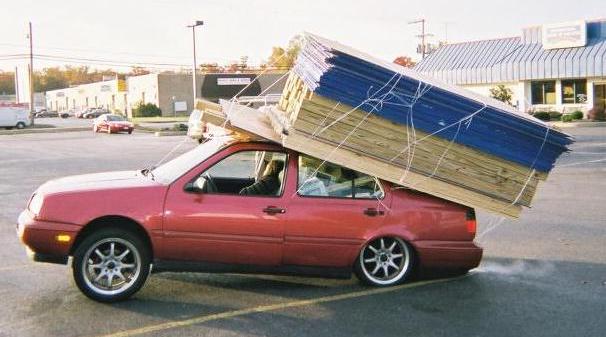
I've been known to have 6 or even 7 55 gallon drums at roughly 450 each in the back of my 2500. I don't particularly LIKE doing it mind you. But it handles it with grace when I do.
A dually would cause me more grief than to be usefull....
Some G or H rated 19's wouldn't hurt anything though!
A dually would cause me more grief than to be usefull....
Some G or H rated 19's wouldn't hurt anything though!