


Truck Camper, Mega Cab, and 20ft Enclosed cross county road trip


Thread Starter
Registered User
Joined: Jul 2012
Posts: 4
Likes: 0
From: North Carolina
Truck Camper, Mega Cab, and 20ft Enclosed cross county road trip
Everything checks out on paper in terms of weight. I have the super hitch, load equalizer, airbags, and E rated tires. Next on the purchase list is a hellwig sway bar.
I'm moving cross county here in December from Idaho to North Carolina. I want to make this as safe/reliable as possible, while being prepared for the worst.
Any advice or modifications that would help?
Thanks in advance.
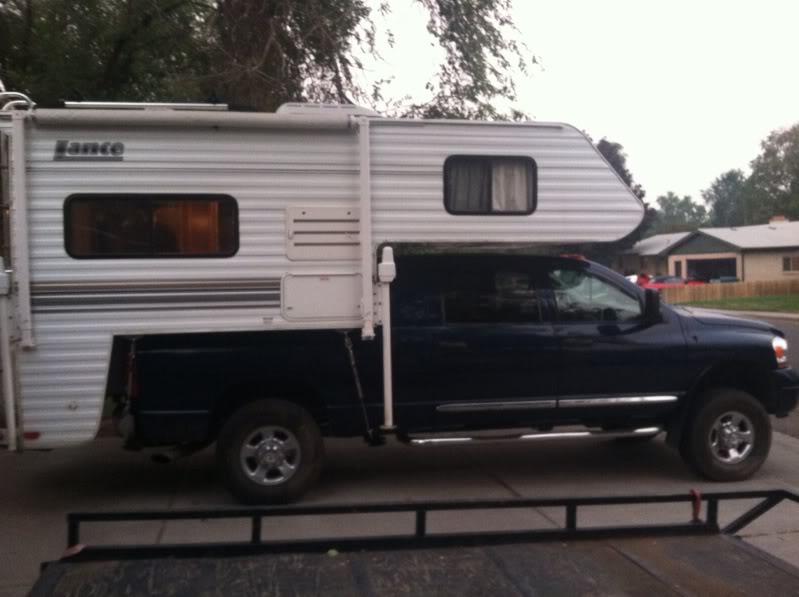
I'm moving cross county here in December from Idaho to North Carolina. I want to make this as safe/reliable as possible, while being prepared for the worst.
Any advice or modifications that would help?
Thanks in advance.

Registered User
Joined: Oct 2008
Posts: 12
Likes: 0
From: Petawawa, Ontario
I had a 06 2500 MC with a Maveric 8801 camper topped out at 11400LB on a trip down east four years ago. The handling was excellent with hellig sway bar, Rancho 9000 shocks, air bags and Toyo AT tires

Registered User
Joined: Feb 2006
Posts: 2,280
Likes: 10
From: Udaho
Sounds like you've nailed the mods to the truck, I guess you have a good trailer brake controller? Probably no need for an exhaust brake with only a 20ft enclosed. Regardless, use tow- haul and 4-low to back-up any inclines (your tranny will thank you).
Make sure the tires and valve stems (I like the metal ones) on the trailer are in good shape, including the spare. No fun changing one on the side of the interstate because of sun-rot or tread separation. Check your lug nut toque daily and for excessive heat every fuel stop, that'll be an indicator of bearing health. If you're not sure the last time the bearings were packed then get that done. You'll also get better mpgs running the tire pressure near max.
Make sure the tires and valve stems (I like the metal ones) on the trailer are in good shape, including the spare. No fun changing one on the side of the interstate because of sun-rot or tread separation. Check your lug nut toque daily and for excessive heat every fuel stop, that'll be an indicator of bearing health. If you're not sure the last time the bearings were packed then get that done. You'll also get better mpgs running the tire pressure near max.

Registered User
Joined: Dec 2006
Posts: 625
Likes: 0
From: Corpus Christi, Texas
EB a good idea no matter what.
There are better trailer brake controllers, but a P3 is the minimum quality device I'd install.
My biggest concern (after tires/brakes) would be steering wander:
1] Worn truck components or alignment issues
2] Trailer axle alignment/brake drag also
The little stuff that is not a problem in local driving sure can add up on a long trip -- and another reason for stopping every two hours for break and walk-around; plan fuel & meal breaks at the four hour marks -- I do this for a living and the long days (not more than 5-600 miles per day) are all about being rested the day long. And not feeling beat on Day Three. A couple of extra days travel time is irrelevant when a problem pops up in front of you . . we all need the rest. Establish a pace, plan the stops in advance, and break out the day into legs.
What does the trailer weigh? A tongue weight of 400-lbs meets the DODGE requirement for a weight distribution hitch. (Remember that TW is measured "static", but the dynamic forces -- the trailer "lever" -- is far greater when going down the road. Anti-sway is always a good idea to have as well.
Your rig already has a lot of "sail area", so a WDH with anti-sway makes more sense than usual. The "goal" is to restore the FA [front axle] to the weight value when the truck is loaded, but not hitched. It also settles more weight on the trailer axles for improved braking. Resistance to winds, natural or man-made, would certainly concern me.
A certified scale is our friend when setting up for towing. I would also weigh each wheel position individually to be sure of truck tire pressure versus load (trailers are always to be at maximum sidewall pressure; be sure trailer tires are not cheap or five years old).
Also:
- CAC leaks
- New fluids
- New external lamps at all positions (LED upgrade on trailer).
.
There are better trailer brake controllers, but a P3 is the minimum quality device I'd install.
My biggest concern (after tires/brakes) would be steering wander:
1] Worn truck components or alignment issues
2] Trailer axle alignment/brake drag also
The little stuff that is not a problem in local driving sure can add up on a long trip -- and another reason for stopping every two hours for break and walk-around; plan fuel & meal breaks at the four hour marks -- I do this for a living and the long days (not more than 5-600 miles per day) are all about being rested the day long. And not feeling beat on Day Three. A couple of extra days travel time is irrelevant when a problem pops up in front of you . . we all need the rest. Establish a pace, plan the stops in advance, and break out the day into legs.
What does the trailer weigh? A tongue weight of 400-lbs meets the DODGE requirement for a weight distribution hitch. (Remember that TW is measured "static", but the dynamic forces -- the trailer "lever" -- is far greater when going down the road. Anti-sway is always a good idea to have as well.
Your rig already has a lot of "sail area", so a WDH with anti-sway makes more sense than usual. The "goal" is to restore the FA [front axle] to the weight value when the truck is loaded, but not hitched. It also settles more weight on the trailer axles for improved braking. Resistance to winds, natural or man-made, would certainly concern me.
A certified scale is our friend when setting up for towing. I would also weigh each wheel position individually to be sure of truck tire pressure versus load (trailers are always to be at maximum sidewall pressure; be sure trailer tires are not cheap or five years old).
Also:
- CAC leaks
- New fluids
- New external lamps at all positions (LED upgrade on trailer).
.

Registered User
Joined: Aug 2007
Posts: 3,901
Likes: 37
From: On the Farm, Manitoba
As already mentioned look for tires and hubs heating up but remember a tire facing the sun will be hotter than one on the other side, you are looking for one that jumps out at you. Buy a cheap infrared thermometer I find one invaluable and always carry one in the truck. I do a walk around check each fuel stop and just point and read. Don't forget those wheel nut torques on the trailer especially if the wheel has been off recently.


Trending Topics

Registered User
Joined: May 2010
Posts: 9
Likes: 0
Rear tires on the rig are the weak link....E-rated doesn't really mean much...and stated load capacity is a close second....all tires are rated by size and inflation pressure, period....some tire casings are much stronger than others...toyo's m55 is a very tough casing compared to a at or mt, for instance...any 19.5 is much better yet, too.

Thread
Thread Starter
Forum
Replies
Last Post
Rednecktastic
Towing and Hauling / RV
13
Dec 17, 2012 08:32 AM
jimbo486
3rd Gen Engine and Drivetrain -> 2003-2007
13
Nov 5, 2009 09:17 AM
paul4romtexas
3rd Generation Ram - Non Drivetrain - All Years
1
Jun 19, 2007 09:56 AM
J10495T
3rd Gen High Performance and Accessories (5.9L Only)
17
May 27, 2007 12:47 AM