


Intake Manifolds


Registered User
Joined: Apr 2003
Posts: 6,564
Likes: 6
From: Cummins Technical Center, IN
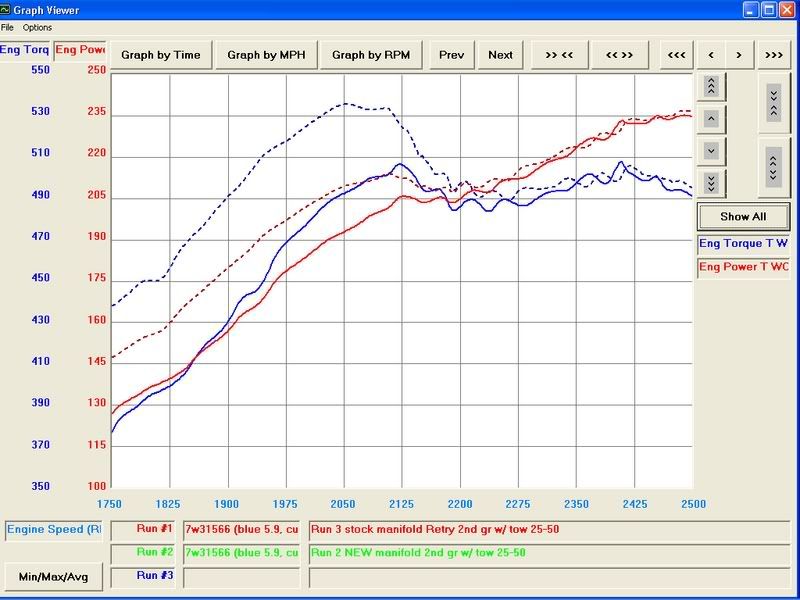
As for the blue and red lines-- well I'd prefer not to stir up a ruckus, but the graphs shows a gain of over 60lb-ft in a couple places.
I'm sorry, but I'll have to point out that is stretches my faith past its elastic limit to believe that an intake manifold like this adds 60 lb-ft!

Registered User
Joined: Nov 2005
Posts: 7,785
Likes: 3
From: Pattonville, Texas
They'll be available either way, Chris - some guys will machine their own during teardown/rebuild and just need the manifold, while others can order the intake on a machined head - returning their good core for a refund or keeping it for a spare (something that plenty of guys do anyhow).
Registered User
Joined: Apr 2003
Posts: 6,564
Likes: 6
From: Cummins Technical Center, IN
I'm not sure what you're asking me XLR8-- I'm a little slow today.
I'm just saying that an air intake with more obstruction in it is NOT going to add power, even if the purpose of the obstruction is to "help" the flow...
jmo
I'm just saying that an air intake with more obstruction in it is NOT going to add power, even if the purpose of the obstruction is to "help" the flow...
jmo
Registered User
Joined: Nov 2005
Posts: 7,785
Likes: 3
From: Pattonville, Texas
I was just commenting that - IIRC - the part in question is an airhorn replacement, not an actual intake manifold (which is an integral part of the CTD head casting).
If that's the airhorn with the internal curved vanes, their frontal area and shape pose a negligible dimunition to the intake charge velocity in the form of parasitic or aerodynamic drag; instead, their design helps prevent laminar flow separation as the intake charge negotiates that sharp turn - similiar to the white plastic "TAG" located in the 90* elbow mounted to the 'charger's compressor housing on 3rd gens.
Nothing wrong with an aftermarket airhorn that is more efficient, but IMO much larger gains are attainable with an aftermarket intake manifold's (retrofit) airflow enhancements with it's associated improvement in the engines VE.
Some mods create new power, while others release existing power - I prefer the latter, since they tend to be of the "free" nature (not in terms of dollars, obviously - just in terms of sense )
)
If that's the airhorn with the internal curved vanes, their frontal area and shape pose a negligible dimunition to the intake charge velocity in the form of parasitic or aerodynamic drag; instead, their design helps prevent laminar flow separation as the intake charge negotiates that sharp turn - similiar to the white plastic "TAG" located in the 90* elbow mounted to the 'charger's compressor housing on 3rd gens.
Nothing wrong with an aftermarket airhorn that is more efficient, but IMO much larger gains are attainable with an aftermarket intake manifold's (retrofit) airflow enhancements with it's associated improvement in the engines VE.
Some mods create new power, while others release existing power - I prefer the latter, since they tend to be of the "free" nature (not in terms of dollars, obviously - just in terms of sense
)

Registered User
Joined: Apr 2003
Posts: 820
Likes: 0
Hohn, actually you could be incorrect. In a force inductucted application there are two ways to obstruct the intake pathway and make more power.
1. Example of gas engine is the turbo buick which has a distribution problem that is well known and to fix the problem a plate is placed between the upper and lower intake. Do a search for "power plate" and Im sure you ll find it. Plenty of flow bench testing to support the peice and real world differences.
2. Since air temp rises with compression (boost) if you obstruct the air way in a way to cause the boost to be higher on one side , as it passes the obstruction it cools the air charge. To achieve say 50 psi on the post side though you would have to make for example sake 60 psi pre obstruction. The low pressure cooled 50 psi would be more dense then 50 psi with no obstruction at all. Its a tricky way of intercooling essecially when intercoolers are not allowed in some class racing.
1. Example of gas engine is the turbo buick which has a distribution problem that is well known and to fix the problem a plate is placed between the upper and lower intake. Do a search for "power plate" and Im sure you ll find it. Plenty of flow bench testing to support the peice and real world differences.
2. Since air temp rises with compression (boost) if you obstruct the air way in a way to cause the boost to be higher on one side , as it passes the obstruction it cools the air charge. To achieve say 50 psi on the post side though you would have to make for example sake 60 psi pre obstruction. The low pressure cooled 50 psi would be more dense then 50 psi with no obstruction at all. Its a tricky way of intercooling essecially when intercoolers are not allowed in some class racing.
Registered User
Joined: Apr 2003
Posts: 6,564
Likes: 6
From: Cummins Technical Center, IN
I can see those being valid cases, especially in the turbo Buick example.
But in the Dodge/Cummins application, a regular intake manifold like a High Ram or somesuch isn't going to experience any real challenges to laminar flow. The factory intake on my 2nd gen obviously has some sharp 90º bends, and this could cause flow separation at higher velocities.
But we have to keep in mind that the tendency to separate changes with density, even at the same velocity. For example, the maximum angle of attack before stall that an airplane wing can have will change with density altitude. The higher the density altitude (the less dense the air), the earlier flow separation will step in.
So the intake manifold on our trucks really isn't much of a restriction because as the velocity in the intake tract speeds up and the flowstream tends toward separation at the sharp bends, you're also seeing an increase in pressure that tends to offset the disturbance of laminar flow.
Hence, the AFE design relative to a Banks design or some other aftermarket intake is a novel approach to an insignificant problem, imo. The air doesn't need much "help" negotiating that tight intake turn. Furthermore, the negative impact of the factory intake's shap bend PALES in comparison to the immediate 90º bend inside the head, and then the next 90º bend the air would have to make to get into a cylinder port (except cylinder #2 or #3 (I can't remember which), which is almost a straight shot from the intake.)
I would contend the 2nd point somewhat, though I can see how in certain cases it would infact be beneficial. For example, let's say I have a fixed thermal transfer coefficient of the inlet path-- manifold, heads, compressor outlet, etc. If I can compress air at the same efficiency to 60psi as I can to 50psi, then there is a possible benefit in that the hotter temp of the 60psi air will shed more heat to the environment (more pressure=more temp) than the 50psi flow stream would. Hence, when you restrict it back down to 50psi, the temp would be lower than if you had 50psi all along, because more heat was dumped.
But this assumes that you can compress air to 50psi as efficiently as you can to 60psi. I think common sense dictates to us that the higher the PR is, the less efficient the compression is, and hence you have a negative overall impact on density-- and density is what it's all about, isn't it? Aren't temp and pressure just means to this end of trying to cram as much mass in a fixed volume as we possibly can?
The converse to this example are the MANY documented cases of lower boost levels making more power when elevated boost came from very inefficient compression. in CTD terms, you'll make a lot more power with an HX40 at 38psi than an HX35 at 42psi, because the dicharge temps of the HX35 are higher by an amount that's more than enough to decrease density more than the increase in pressure can raise it. Result is a net loss in density.
The turbo Buick guys are about has highly evolved as people get with turbo smarts and engineering. But those lessons don't always translate directly to the CTD-- we have to account for circumstances.
One thing I'd like to see for our truck is some kind of diffuser at the entrance into the head. As it is now, the transition from the intake horn to the cylinder head itself is about is bad for performance as a person could dream up. A diffuser would greatly aid the transition.
There's a reason the Banks Sidewinder had so much attention paid to the intake manifolding. It's certainly one of the biggest performance weaknesses of the engine. So bad, that I suspect focusing too intently on what happens BEFORE it gets there is missing the "forest for the trees" so to speak.
Though, every bit surely does help. It's just that even under great conditions, incremental improvement is the best you could hope for.
In other words, would rather take the factory head layout with an AFE intake horn, or the ZZ manifold with the factory intake horn?
I think we'd all choose the latter...
JMO
But in the Dodge/Cummins application, a regular intake manifold like a High Ram or somesuch isn't going to experience any real challenges to laminar flow. The factory intake on my 2nd gen obviously has some sharp 90º bends, and this could cause flow separation at higher velocities.
But we have to keep in mind that the tendency to separate changes with density, even at the same velocity. For example, the maximum angle of attack before stall that an airplane wing can have will change with density altitude. The higher the density altitude (the less dense the air), the earlier flow separation will step in.
So the intake manifold on our trucks really isn't much of a restriction because as the velocity in the intake tract speeds up and the flowstream tends toward separation at the sharp bends, you're also seeing an increase in pressure that tends to offset the disturbance of laminar flow.
Hence, the AFE design relative to a Banks design or some other aftermarket intake is a novel approach to an insignificant problem, imo. The air doesn't need much "help" negotiating that tight intake turn. Furthermore, the negative impact of the factory intake's shap bend PALES in comparison to the immediate 90º bend inside the head, and then the next 90º bend the air would have to make to get into a cylinder port (except cylinder #2 or #3 (I can't remember which), which is almost a straight shot from the intake.)
I would contend the 2nd point somewhat, though I can see how in certain cases it would infact be beneficial. For example, let's say I have a fixed thermal transfer coefficient of the inlet path-- manifold, heads, compressor outlet, etc. If I can compress air at the same efficiency to 60psi as I can to 50psi, then there is a possible benefit in that the hotter temp of the 60psi air will shed more heat to the environment (more pressure=more temp) than the 50psi flow stream would. Hence, when you restrict it back down to 50psi, the temp would be lower than if you had 50psi all along, because more heat was dumped.
But this assumes that you can compress air to 50psi as efficiently as you can to 60psi. I think common sense dictates to us that the higher the PR is, the less efficient the compression is, and hence you have a negative overall impact on density-- and density is what it's all about, isn't it? Aren't temp and pressure just means to this end of trying to cram as much mass in a fixed volume as we possibly can?
The converse to this example are the MANY documented cases of lower boost levels making more power when elevated boost came from very inefficient compression. in CTD terms, you'll make a lot more power with an HX40 at 38psi than an HX35 at 42psi, because the dicharge temps of the HX35 are higher by an amount that's more than enough to decrease density more than the increase in pressure can raise it. Result is a net loss in density.
The turbo Buick guys are about has highly evolved as people get with turbo smarts and engineering. But those lessons don't always translate directly to the CTD-- we have to account for circumstances.
One thing I'd like to see for our truck is some kind of diffuser at the entrance into the head. As it is now, the transition from the intake horn to the cylinder head itself is about is bad for performance as a person could dream up. A diffuser would greatly aid the transition.
There's a reason the Banks Sidewinder had so much attention paid to the intake manifolding. It's certainly one of the biggest performance weaknesses of the engine. So bad, that I suspect focusing too intently on what happens BEFORE it gets there is missing the "forest for the trees" so to speak.
Though, every bit surely does help. It's just that even under great conditions, incremental improvement is the best you could hope for.
In other words, would rather take the factory head layout with an AFE intake horn, or the ZZ manifold with the factory intake horn?
I think we'd all choose the latter...
JMO

Registered User
Joined: Feb 2016
Posts: 37
Likes: 6
From: Butte, Montana
Horse back from the dead
X2 ~
As we all know, a diesel's output is based solely on it's fuel input. With that most improvements to airflow result primarily in EGT reduction.
It does that by the increase in the cylinder's charge air density. More air to absorb the heat input.
BUT, remember, all infernal combustion engines work by way of expanding air using the heat provided by the burning fuel.
So,
The more charge air in the cylinder, coupled with the appropriate additional fuel, the more power available. It's really nice to have equal cylinder pressures (see headgasket) so as to extract all potential without one bad apple spoiling the lot as it were.
As mentioned above, the TwinRam works best in more evenly distributing the incoming charge air. Especially to cylinder no. one as there's a bolt boss in the turn just before the valve ~
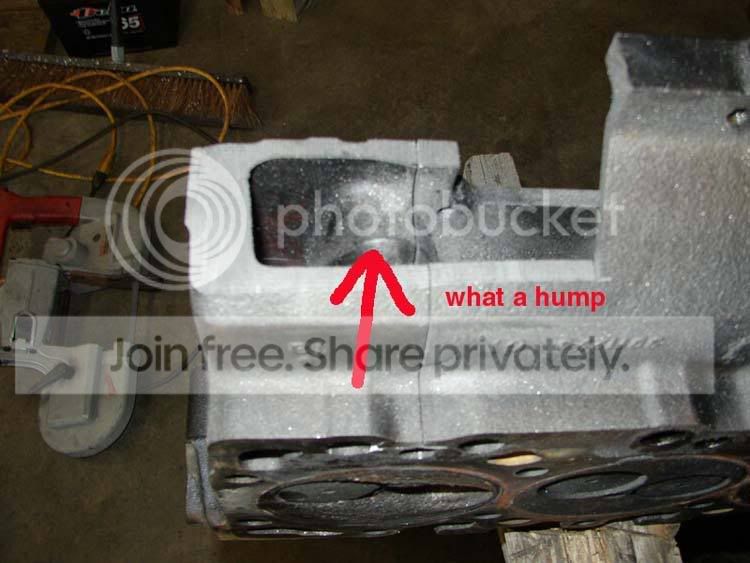
Short of milling off the side of the head and bolting a custom full width manifold, you can't do much better imo.
It's no big whoop, folks have been doing it for a while ~
...
.
As we all know, a diesel's output is based solely on it's fuel input. With that most improvements to airflow result primarily in EGT reduction.
It does that by the increase in the cylinder's charge air density. More air to absorb the heat input.
BUT, remember, all infernal combustion engines work by way of expanding air using the heat provided by the burning fuel.
So,
The more charge air in the cylinder, coupled with the appropriate additional fuel, the more power available. It's really nice to have equal cylinder pressures (see headgasket) so as to extract all potential without one bad apple spoiling the lot as it were.
As mentioned above, the TwinRam works best in more evenly distributing the incoming charge air. Especially to cylinder no. one as there's a bolt boss in the turn just before the valve ~
Short of milling off the side of the head and bolting a custom full width manifold, you can't do much better imo.
It's no big whoop, folks have been doing it for a while ~
...
.
You seem quite knowledgeable on air flow . I'vebeen trying to figure out a way to improve flow to 1 without having to mill the head.
I have a DAP 3pice manifold with a thermocouple for each cylinder set @same valve distances .125 sec responce probes to install in front of my BD spool valved HX35W12 .
To measure the effects on cylinder temp balance of running a spool valve bringing my 1st gen on stock fuel down to 6cm .
Boost is up accrost the bord and egt is down per psi. 600° was 2-3psi 60-65mph ,now 10-15psi 65-75mph. Driving north on I-15 threw ID the other night IAT was 32° f with 10-15psi 130at the compressor elbow egt 600-630°.
Plan to test improvements starting from the turbocharger elbow to the intake valve.
Your point about improving the volumetric efficiency cools the EGTthis I have seen as I have extracted more efficient energy from the exhost. H1C21 1100° 12psi to H1C 16 1000° 17psi HX35W12 900° 25psi anda spool valve full open by 18psi ,also got injectors repoped.
---
I agree the twin should helps but wouldn't pushing the front closer to #1 help more. I've not had the intake plate off yet. Could I just put a longer plate on and make the integrated intake the same all the way to the front giving room to get in with a carbide removing the hump and bosses showen in your pic?
Or one of theas DAP branded Cummins 6bta aftercoolers . With a set of custom lines or since this is a Cummins part. lines should be available from Cummins.
Current max effert (2375 rpm 103mph for 10mi) I am seeing 55 ambient 312° max compressor outlet, 123° IAT, 932EGT so the IC is not up to task showing 60+above ambient , however on the other end of the spectrum city driving is showing 0-8° above 32° ambient.
----
How cold is to cold IAT and EGT?
Some insight would be useful

Thread
Thread Starter
Forum
Replies
Last Post
D45
3rd Gen High Performance and Accessories (5.9L Only)
17
Dec 6, 2007 01:52 PM
BigJohnston
3rd Gen High Performance and Accessories (5.9L Only)
12
Sep 25, 2007 12:29 PM
farmboykjb5.9
3rd Gen High Performance and Accessories (5.9L Only)
20
Aug 19, 2007 08:59 AM
Sapps
3rd Gen High Performance and Accessories (5.9L Only)
12
Mar 28, 2007 07:42 AM
Bobcat698
Performance and Accessories 2nd gen only
33
Sep 25, 2005 09:31 PM