


CB Radios?


Thread Starter
Registered User
Joined: Nov 2005
Posts: 100
Likes: 0
From: Amity,Me
CB Radios?
I am most likely getting a '88 Chevy K1500 V6/Auto for $2500 from my dads snow plowing business partner. It has 15,000miles on a new engine,2 sets of alum. wheels and brand new tires on it,8ft Diamond plow blade,new black paint job.Only down side is I wont get it till Easter since it is in Pa and their is no sense of running down there to pick it up if we are going down in a month.
The first thing I want to do is install a CB and some whips,I was looking on sugg. on CB brands and their pros and cons. Also who makes a good set of whips to go along with the CB?
I will popst some pics. of the truck when i get it up here..
Thanks
Jeff
The first thing I want to do is install a CB and some whips,I was looking on sugg. on CB brands and their pros and cons. Also who makes a good set of whips to go along with the CB?
I will popst some pics. of the truck when i get it up here..
Thanks
Jeff


Registered User
Joined: Apr 2005
Posts: 543
Likes: 0
Wilson also makes good antennas. Better to spend more $$ on the antenna. A cheap radio with expensive antenna will work better than a expensive radio and cheap antenna.
Go to the wilson or firestick websites and read up about all the different antennas and how to tune them. Excellent info there.
Go to the wilson or firestick websites and read up about all the different antennas and how to tune them. Excellent info there.

Registered User
Joined: Sep 2005
Posts: 653
Likes: 0
From: Simi Valley, Calif.
From past experience, Cobra is a good radio.
You could do a search for"cb radio" and there are a ton of online places to get radios.
As was mentioned before, the key is getting a good antenna.
Personally, I have a Cobra 25 and a thru the glass antenna from Radio Shack and it works ok. But Im changing it to a 5' Wilson whip mounted on the fender when I get a chance.
You could do a search for"cb radio" and there are a ton of online places to get radios.
As was mentioned before, the key is getting a good antenna.
Personally, I have a Cobra 25 and a thru the glass antenna from Radio Shack and it works ok. But Im changing it to a 5' Wilson whip mounted on the fender when I get a chance.
Thread Starter
Registered User
Joined: Nov 2005
Posts: 100
Likes: 0
From: Amity,Me
Does this look like a good radio?
Cobra CB
With this antenna?
FireStick Antenna
One more question, What els to I need to purchase in order to hook up the radio and antennas when i go to install it? I would like to get everything at once so I don't have tp wait..
Thanks
Jeff
Cobra CB
With this antenna?
FireStick Antenna
One more question, What els to I need to purchase in order to hook up the radio and antennas when i go to install it? I would like to get everything at once so I don't have tp wait..
Thanks
Jeff
Trending Topics

Administrator / Scooter Bum
Joined: Sep 2002
Posts: 9,090
Likes: 52
From: Central VA
Those are very similar to what I'm using.
I'm running the Fender Mount for the antenna, and the old Brolin Mount for the radio that's now available from Geno's garage as the Wonder Mount.

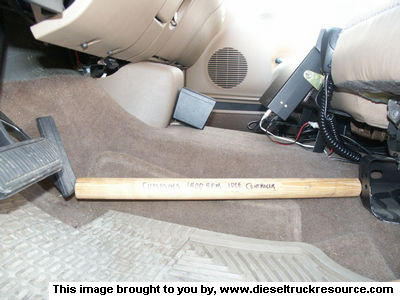
I'm running the Fender Mount for the antenna, and the old Brolin Mount for the radio that's now available from Geno's garage as the Wonder Mount.

Administrator / Scooter Bum
Joined: Sep 2002
Posts: 9,090
Likes: 52
From: Central VA
Those are very similar to what I'm using.
I'm running the Fender Mount for the antenna, and the old Brolin Mount for the radio that's now available from Geno's garage as the CB Mount.

http://www.genosgarage.com/CoastalDa...D=1492&CATID=1
I'm running the Fender Mount for the antenna, and the old Brolin Mount for the radio that's now available from Geno's garage as the CB Mount.
http://www.genosgarage.com/CoastalDa...D=1492&CATID=1

Registered User
Joined: Nov 2004
Posts: 104
Likes: 0
From: New Philadelphia, OH

I have a Cobra 29 LTD with a noise cancelling mike and a Wilson 1000 antennae on top of the cab. Great range, clear reception and with the mike iit is clear as a bell oin the other end
R/
Eric
R/
Eric
Registered User
Joined: Jul 2004
Posts: 246
Likes: 0
From: Dinwiddie, VA
IF you want the best performance nothing can out perform a true 1/4 wavelength antenna such as a 102" steel whip. Being that most people do not want an antenna that large most people go with a Wilson 1000. Here you go read this ....
This is an area of hot competition among antenna manufactures. I am not going to cover how to mount your mobile antenna (Radio Shack sells everything you need to mount antennas), but the basic mobile antenna designs that most mobile antennas manufactures are using today. If you have just started reading my page and are new to antennas, you are going to be confused. You cannot just jump right into putting together an antenna without learning a few things about them first. You have to read "Antennas Basics", "Coax Basics" and the "Verticals" sections first before you tackle this section. First we need to introduce a new term that we will be using to rate mobile antennas (gain really isn't a good thing to use, since mobile antennas generally have no gain), "antenna efficiency". This is how well the antenna converts your power (watts) to signal instead of wasting it as heat. An efficient antenna puts most of the power out as signal, so the range of 95-99% is a perfectly efficient radiator (all antennas waste some power, none are 100% efficient). Most base station antennas are 95-99% efficient. Say you are using 100 watts, and your antenna converts 95 watts to signal and turns the remaining 5 watts into heat, this is a 95% efficient antenna.
The most efficient mobile antenna is the 102" whip. If you desire the best performance, the 102" (quarter wave) whip is the only way to go. If you look back to the "Verticals" section and look at the ground plane (figure 1 in "Verticals" section) you can see the main vertical element is basically a 102" whip. The center wire connects to this part. It must be insulated from the vehicle body. This is usually accomplished by a plastic washer. Now, the vehicle body acts as the ground plane, or like the radials on the ground plane antenna! The feedpoint impedance of the 102" whip when mounted on most vehicles is 40 Ohms, so the lowest SWR you can get is 1:3:1. When you assemble this antennas system, if the SWR is above 3:1 on all the 40 channels, then you have a bad connection somewhere. If your coax is ok (see "Coax Basics" section) then you probably have a short or open circuit on your connection to the whip. Check the connections with an Ohm meter, center pin of radio side of coax should have an electrical connection to the actual whip and not the body of the vechicle, and the collar of the radio side of the coax should have an electrical connection to the body of the vehicle and not the whip itself. Make sure your assembly is right. If everything is assembled right, you should see an SWR 2:1 and lower (down to about 1:2:1) over the 40 channels. Really, your whip should not need adjustment, so before you think about "pruning" it, you better check to make sure things are working right. Do not let the 2:1 SWR fool you, getting it down to 1:2:1 will not get you much more (if any) performance! The only exception to pruning your whip is if you intend on talking above channel 40. If you use, lets say 27.555MHz, then you will need to trim a few inches off the tip of the antenna. Start by trimming a 1/4 of an inch off at a time and rechecking until your SWR is where you want it.If you need to lengthen the antenna, you can do so by added a spring or quick-disconnect fitting which will add around 2 - 4" to the overall height. This should get you well below channel 1 with a low SWR.
Most of us do not have room to use a 102" whip on our vehicle. Plenty of manufactures make a shortened antenna for our use. How do they do that? Simple, somewhere on the antenna (the base, center, top or entire antenna) they wind a coil to compensate for the length that they are shortening the antenna from 102". So if your mobile antenna is 54 inches, the manufacture has made a coil to compensate for the 48" inches they are short from 102" (102 - 54 = 48). When a coil is added to an antenna it does three things. One, it cuts down on the antenna's efficiency. Second, it cuts down on the bandwidth. Third it cuts down the antennas impedance (it lowers it even more than 40 Ohms). The shorter the antenna is made, the more these three factors are reduced.
Extremely short antennas are to be avoided at all costs.
This is an area of hot competition among antenna manufactures. I am not going to cover how to mount your mobile antenna (Radio Shack sells everything you need to mount antennas), but the basic mobile antenna designs that most mobile antennas manufactures are using today. If you have just started reading my page and are new to antennas, you are going to be confused. You cannot just jump right into putting together an antenna without learning a few things about them first. You have to read "Antennas Basics", "Coax Basics" and the "Verticals" sections first before you tackle this section. First we need to introduce a new term that we will be using to rate mobile antennas (gain really isn't a good thing to use, since mobile antennas generally have no gain), "antenna efficiency". This is how well the antenna converts your power (watts) to signal instead of wasting it as heat. An efficient antenna puts most of the power out as signal, so the range of 95-99% is a perfectly efficient radiator (all antennas waste some power, none are 100% efficient). Most base station antennas are 95-99% efficient. Say you are using 100 watts, and your antenna converts 95 watts to signal and turns the remaining 5 watts into heat, this is a 95% efficient antenna.
The most efficient mobile antenna is the 102" whip. If you desire the best performance, the 102" (quarter wave) whip is the only way to go. If you look back to the "Verticals" section and look at the ground plane (figure 1 in "Verticals" section) you can see the main vertical element is basically a 102" whip. The center wire connects to this part. It must be insulated from the vehicle body. This is usually accomplished by a plastic washer. Now, the vehicle body acts as the ground plane, or like the radials on the ground plane antenna! The feedpoint impedance of the 102" whip when mounted on most vehicles is 40 Ohms, so the lowest SWR you can get is 1:3:1. When you assemble this antennas system, if the SWR is above 3:1 on all the 40 channels, then you have a bad connection somewhere. If your coax is ok (see "Coax Basics" section) then you probably have a short or open circuit on your connection to the whip. Check the connections with an Ohm meter, center pin of radio side of coax should have an electrical connection to the actual whip and not the body of the vechicle, and the collar of the radio side of the coax should have an electrical connection to the body of the vehicle and not the whip itself. Make sure your assembly is right. If everything is assembled right, you should see an SWR 2:1 and lower (down to about 1:2:1) over the 40 channels. Really, your whip should not need adjustment, so before you think about "pruning" it, you better check to make sure things are working right. Do not let the 2:1 SWR fool you, getting it down to 1:2:1 will not get you much more (if any) performance! The only exception to pruning your whip is if you intend on talking above channel 40. If you use, lets say 27.555MHz, then you will need to trim a few inches off the tip of the antenna. Start by trimming a 1/4 of an inch off at a time and rechecking until your SWR is where you want it.If you need to lengthen the antenna, you can do so by added a spring or quick-disconnect fitting which will add around 2 - 4" to the overall height. This should get you well below channel 1 with a low SWR.
Most of us do not have room to use a 102" whip on our vehicle. Plenty of manufactures make a shortened antenna for our use. How do they do that? Simple, somewhere on the antenna (the base, center, top or entire antenna) they wind a coil to compensate for the length that they are shortening the antenna from 102". So if your mobile antenna is 54 inches, the manufacture has made a coil to compensate for the 48" inches they are short from 102" (102 - 54 = 48). When a coil is added to an antenna it does three things. One, it cuts down on the antenna's efficiency. Second, it cuts down on the bandwidth. Third it cuts down the antennas impedance (it lowers it even more than 40 Ohms). The shorter the antenna is made, the more these three factors are reduced.
Extremely short antennas are to be avoided at all costs.
Thread Starter
Registered User
Joined: Nov 2005
Posts: 100
Likes: 0
From: Amity,Me
Yea..I don't want a 102" whip,I am looking at the 60" ones i want to mount two right behind the cab on the bed rails. I am gonna be building a headache rack for it to mount a light bar and some Aux. lights, so i might end up mounting the whips on top of the headache rack which would give me more height. I was looking at the other Cobra radios,but i did not se any with 24hr weather except for the one i posted above. I was wondering how weel that would work instead of a more expensive one since the 24hr weather would come in handy during plowing season.
Thanks
Jeff
Thanks
Jeff

Registered User
Joined: Feb 2006
Posts: 1,065
Likes: 0
From: Oldenburg, Indiana
I've got those antennas mounted on the bed rails behind the cab and thier good antennas. As for the radio I don't know I'm running one of classic series that are analog and have the chrome face plates.

Registered User

Joined: Feb 2003
Posts: 1,747
Likes: 0
From: McKinney, TEXAS
Jeff,
I have an inexpensive Cobra CB, bought it to fit in the pocket in the dash (I have a manual). I also bought a scanner, the scanner has dedicated NOAA channels on it. I mounted 2 4' whips behind the cab, one for the CB and one for the scanner. I mounted them on the sides of my crossover toolbox. The combo works very well
For the CB antenna, I went with a Firestik II (I think). It has a tuneable tip. I also bought a VSWR meter at Radio Shack.


~Rob
I have an inexpensive Cobra CB, bought it to fit in the pocket in the dash (I have a manual). I also bought a scanner, the scanner has dedicated NOAA channels on it. I mounted 2 4' whips behind the cab, one for the CB and one for the scanner. I mounted them on the sides of my crossover toolbox. The combo works very well
For the CB antenna, I went with a Firestik II (I think). It has a tuneable tip. I also bought a VSWR meter at Radio Shack.
~Rob