


double check my work please - fp gauge on 01 2500


Thread Starter
Registered User
Joined: Feb 2013
Posts: 74
Likes: 0
From: denver, co
double check my work please - fp gauge on 01 2500
Hey all,
I've been putting this job off until i had a better idea of the best way to do it.
I will turn this into a clear writeup for those of us who are cornfused about how best to install our gauges...
The wild card here is mounting location for the gauge hose. on my 01, I have the schrader valve test ports. I've seen recommendations to get a drilled and tapped (or self-drill and tap) banjo bolt at 1/8npt.
The schrader seems far easier. can I remove the valve stem like on a tire schrader? Or is the alternative to just remove the valve itself? And which fitting sizes am I looking at to install my needle valve directly to the VP?
So far my shopping list involves tapping the banjo:
tap and drill set for 1/8"npt
1/8npt brass needle valve
braided stainless line to get to pillar mount (source to buy this/length?)
isspro mechanical gauge
Thx all,
C
I've been putting this job off until i had a better idea of the best way to do it.
I will turn this into a clear writeup for those of us who are cornfused about how best to install our gauges...
The wild card here is mounting location for the gauge hose. on my 01, I have the schrader valve test ports. I've seen recommendations to get a drilled and tapped (or self-drill and tap) banjo bolt at 1/8npt.
The schrader seems far easier. can I remove the valve stem like on a tire schrader? Or is the alternative to just remove the valve itself? And which fitting sizes am I looking at to install my needle valve directly to the VP?
So far my shopping list involves tapping the banjo:
tap and drill set for 1/8"npt
1/8npt brass needle valve
braided stainless line to get to pillar mount (source to buy this/length?)
isspro mechanical gauge
Thx all,
C

Registered User
Joined: Aug 2007
Posts: 3,901
Likes: 37
From: On the Farm, Manitoba
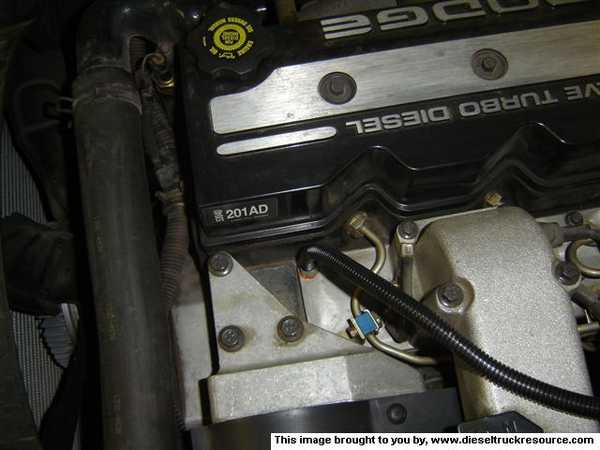
I fitted my Fuel pressure gauge line onto the schrader valve after removing the core. I also used an isolator. which is also a good place to bleed the system. There is no drilling and tapping unless you are doing EGT and boost pressure as well. The drill and tap usually comes with the EGt gauge and for boost they also supply the bolt so again no drill and tap. Fuel[IMG] [/IMG] EGT [IMG]
 [/IMG] Boost [IMG]
 [/IMG]
[/IMG] EGT [IMG][/IMG] Boost [IMG][/IMG]
Thread Starter
Registered User
Joined: Feb 2013
Posts: 74
Likes: 0
From: denver, co
These are exactly the pics I've been looking for. So what does one use to remove the core of the schrader? It's obviously different from the valve stem tool for a tire..
Think I'll still go with a needle valve before the compression fittings and i may skip the isolator - so braided stainless line would be preferred for less flex and more durabilty.
I am doing EGT and boost gauges too, but I'm all set on those.
Think I'll still go with a needle valve before the compression fittings and i may skip the isolator - so braided stainless line would be preferred for less flex and more durabilty.
I am doing EGT and boost gauges too, but I'm all set on those.
Thread Starter
Registered User
Joined: Feb 2013
Posts: 74
Likes: 0
From: denver, co
i guess it's just a little nerves. Been a while since i've modified a vehicle in any way, and the last one was an 84 toyota truck. I just don't want to screw up my Cummins - it's had enough shady history before me.
C
C
Registered User
Joined: Aug 2007
Posts: 3,901
Likes: 37
From: On the Farm, Manitoba
It's many years ago I did the gauges on the truck in the pics but I think you just remove the dust cap and use a regular tire valve remover just bleed off any residual pressure first by depressing the top of the schrader valve covered with a wiper. I just saw your last post. When you are tapping the hole in the exhaust manifold DO NOT FORCE the tap, they break very easily as they are very hard and brittle.
Thread Starter
Registered User
Joined: Feb 2013
Posts: 74
Likes: 0
From: denver, co
And the manifold is steel, right? So it should have a little "flex" to it, not like cast iron? I bought a tap and drill set matched, so the hole will be the proper size. I've tapped steel before, but plate, not cast...
I'm not gonna lie, tapping an exhaust manifold scares me a little.
I'm not gonna lie, tapping an exhaust manifold scares me a little.
Registered User
Joined: Aug 2007
Posts: 3,901
Likes: 37
From: On the Farm, Manitoba
The exhaust manifold is cast iron so some self lubricating properties but use a cutting oil, The only thing to remember is "don't break the tap" . As when tapping any cast iron take small cuts and use a good cleaning motion, more than you would with steel. As you can see from the pic it's off to one side as it's thicker in the middle. You'll be OK so long as you don't rush it.
. As when tapping any cast iron take small cuts and use a good cleaning motion, more than you would with steel. As you can see from the pic it's off to one side as it's thicker in the middle. You'll be OK so long as you don't rush it.
Trending Topics

Registered User
Joined: Apr 2010
Posts: 403
Likes: 18
From: Alberta, Canada
If you haven't proceeded yet, heed the "slowly" part of the given advice. You may also benefit by putting a gob of grease on the bit to pick up metal refuse. Don't forget to have the motor idling in order to blow any metal immediately away from the hole as you punch through the manifold. If the motor ain't running you will have to remove your turbo to clean out any metal flakes/pieces that fall into the manifold.
Cheers!
Mike
Cheers!
Mike

Registered User


Joined: May 2007
Posts: 2,161
Likes: 10
From: Sarasota, FL
Instead of running the engine to tap the exhaust manifold, loosen the nuts/bolts for the turbo and insert a piece of cardboard leaving a gap in there. With the angle, the loose particles will fall out the bottom, clean the rest w/a magnet.
For the stainless braided line, I used a refrigerator water supply line from Lowes, you can get them in different lengths and they're guaranteed not to break. (don't ask, lol)
For the stainless braided line, I used a refrigerator water supply line from Lowes, you can get them in different lengths and they're guaranteed not to break. (don't ask, lol)

Registered User


Joined: May 2006
Posts: 5,614
Likes: 167
From: Pacific NW, B'ham, Kalispell MT
Slow is important, but so is backing the tap off at each quarter turn or less to clear the chips. Don't get greedy and try to turn it too far or it'll break. A little at a time and back it up.
The grease gob is a good tip as is the cardboard between the turbo inlet and manifold.
I alwasy get in a hurry near the end and need to tell myself to relax!!
The grease gob is a good tip as is the cardboard between the turbo inlet and manifold.
I alwasy get in a hurry near the end and need to tell myself to relax!!
Thread Starter
Registered User
Joined: Feb 2013
Posts: 74
Likes: 0
From: denver, co
All the best advice ends with "don't ask."
Y'all have been SUPER helpful here! I was all set to head up to a hydraulic hose shop today to ask about custom lines!
So since you guys are currently heading my mistakes off at the pass, is it possible to find a needle valve that will fit the -4JIC schrader threads? And then there'll be a npt converter for the back of the gauge, correct?
Thanks!
C
Y'all have been SUPER helpful here! I was all set to head up to a hydraulic hose shop today to ask about custom lines!
So since you guys are currently heading my mistakes off at the pass, is it possible to find a needle valve that will fit the -4JIC schrader threads? And then there'll be a npt converter for the back of the gauge, correct?
Thanks!
C

Registered User
Joined: Jun 2004
Posts: 555
Likes: 5
From: Seattle, WA
I don't put any fuel psi attachments right at the injection pump. I usually find the inlet port of the VP44 has pulsation, and the gauge bounces. If the truck has as tock fuel filter housing I'll hook the gauge up at that port.
Or, if you're running any electric pump on the frame and have a fuel hose running up to the engine, then I'll use the Glacier Diesel inline psi barb spliced into the hose.
Or, if you're running any electric pump on the frame and have a fuel hose running up to the engine, then I'll use the Glacier Diesel inline psi barb spliced into the hose.
Thread Starter
Registered User
Joined: Feb 2013
Posts: 74
Likes: 0
From: denver, co
I'm going to go look for a JIC threaded stainless hose and a needle valve at a hydraulic shop once i know what lengths i'm working with. Good to have the shutoff, and it seems that the consensus here is the needle valve dampens things a bit. I don't plan on purging the line much at all, so any air in there should also help with dampening the pulses.

Thread
Thread Starter
Forum
Replies
Last Post
unioncreek
Performance and Accessories 2nd gen only
4
Jul 11, 2013 06:33 PM
pmtg
3rd Gen Engine and Drivetrain -> 2003-2007
16
Jul 7, 2013 05:57 PM